
At Savoir-Faire Jewellery, the shape of the centre diamond is the first thing anyone notices and the single choice that sets a ring's whole personality. The short answer to choosing well for someone else: match the shape to their existing taste rather than this year's trend list, then pressure-test that instinct against three practical realities — how the shape flatters their hand, how much stone your budget actually shows face-up, and how well it survives daily wear. Get those three right and the rest is detail.
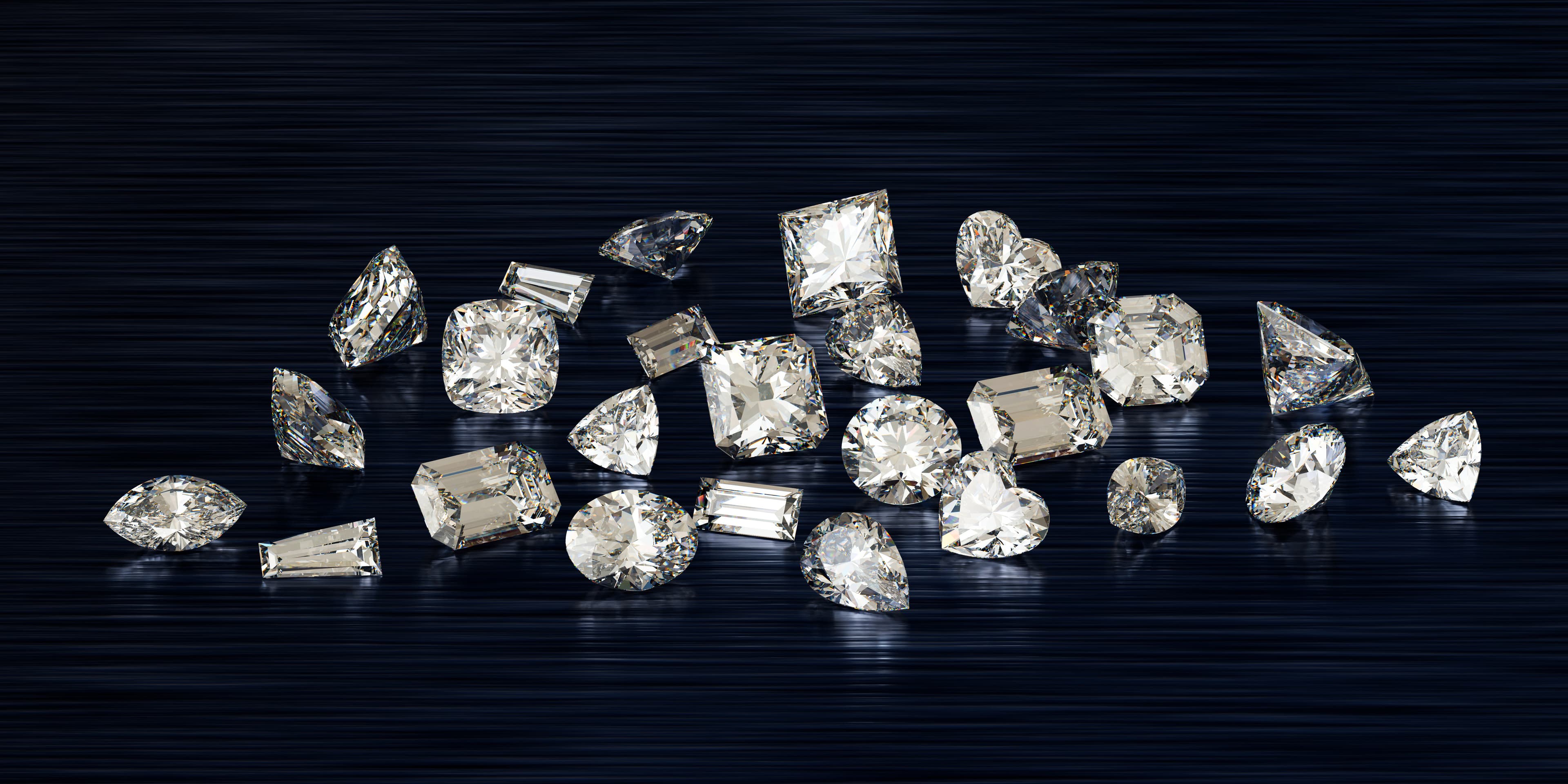
There are ten shapes worth knowing — round, oval, emerald, cushion, princess, radiant, asscher, marquise, pear and heart — plus the newer moval. Below is who each one suits, which ones look biggest for the money, the one flaw no certificate will ever show you, and the shapes that genuinely need a protective setting.
Read their taste before you read the trend charts
You do not need to ask and ruin the surprise. The strongest signals are already on their hand and their phone.
- Their existing jewellery. Note the metal tone first — do they wear warm yellow and rose gold, or cool white gold and platinum? Then look at line: people who favour angular pieces tend to like emerald, asscher, princess and marquise; people who wear curved, softer pieces gravitate to round, oval, cushion and pear. A ring they already wear also gives you a discreet size reference — or send off for a free ring sizer.
- Their saved boards. A Pinterest board or a folder of Instagram saves is the least ambiguous evidence you will ever get. Look for the shape that repeats, not the single dream ring.
- Browse together, casually. Trying rings on when you happen to be near a jeweller reveals what they reach for and what they quietly put back down.
- Ask their inner circle. A sibling or best friend has usually heard the specifics you never will.
Safe defaults if their taste is genuinely unknown: round still leads the market in 2026 and oval is closing fast — and both flatter almost every finger. Between them, oval is the stronger "can't-go-wrong" pick for an unknown taste, because it also lengthens the finger and shows more size per carat. For a fuller picture of settings and silhouettes, our engagement ring styles guide pairs well with this one.
The ten shapes at a glance
| Shape | Best suits | Watch for |
|---|---|---|
| Round | Classic, safe, easiest to verify and resell | Costs most per carat; shows least face-up |
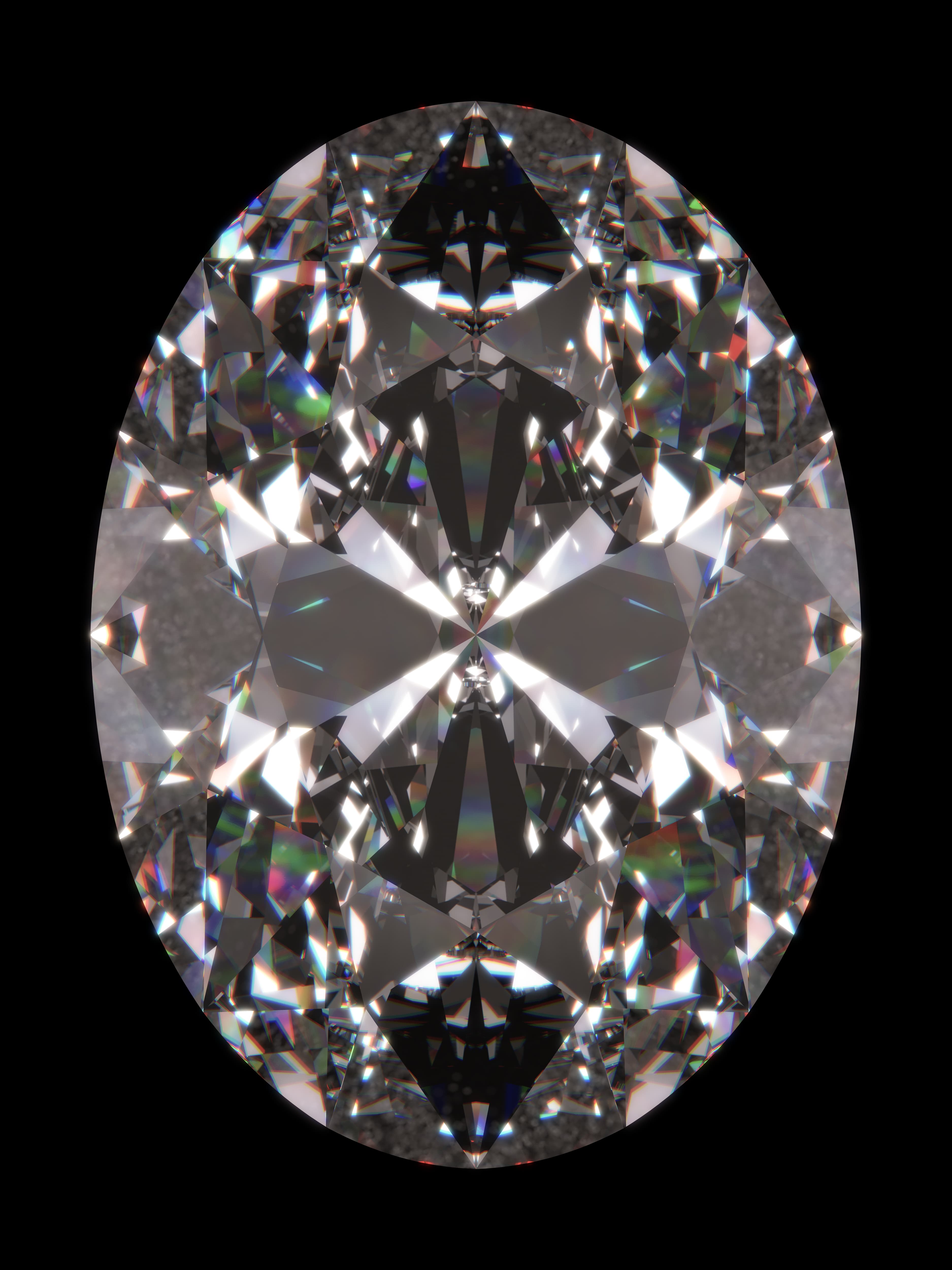
| Oval | Modern classic; lengthens and slims the finger | Can show a bow-tie — check on video |
| Emerald | Art Deco and understated; elongating | Open step facets reveal inclusions and colour |
| Cushion | Soft, vintage; kind to shorter fingers | Gentle glow, less fire than a round |
| Princess | Crisp, contemporary, square | Sharp 90° corners — the most exposed of any shape |
| Radiant | Wants brilliance with straight edges | Sturdier corners than princess; no real weak point |
| Asscher | Symmetrical, geometric, vintage | Deeply cropped corners; inclusions show readily |
| Marquise | Boldest; the largest face-up spread of any shape | Two sharp points plus bow-tie risk |
| Pear | Romantic, elongating, distinctive | One fragile point; can show a bow-tie |
| Heart | Playful, overtly romantic | Needs roughly 0.75ct+ to read as a heart |
A few things the table can only hint at. Emerald and cushion are the standout statement trends for 2026 — pick them when you already know the partner wants something less conventional. The heart comes with a genuine minimum: below about 0.75ct the lobes and cleft stop reading and it just looks like a rounded pear, so it is the wrong choice for a small stone. And if they love the drama of a marquise but not the sharp tips, the moval — marquise elongation with an oval's softened, non-pointed ends — is the 2026 hybrid worth knowing; it is rare and pricey in natural rough but far more available lab-grown.
Want more ring for the money? Go elongated
This is the most useful practical lever in the whole decision. Elongated shapes — marquise, oval, pear and elongated cushion — face up roughly 10–15% larger than a round of the same carat weight, because their weight spreads across the surface instead of hiding down in the depth where you can't see it. Concretely, at one carat a round brilliant measures about 6.4mm across, an oval about 8mm long, and a marquise about 10.3mm long. Same weight, same budget, visibly more finger coverage. If "how big it looks" matters more than the shape being a perfect circle, elongated wins every time — and marquise wins hardest. These same elongated shapes are also the ones that shine in an east-west setting, worn sideways for even more visual length.
The bow-tie: the flaw no certificate will show you
Every elongated brilliant cut — oval, pear, marquise and heart — can carry a bow-tie: a dark shadow shaped like a bow across the centre of the stone, caused by facets leaking light. A faint one is normal; a heavy black one is a permanent eyesore that no cleaning or setting will fix. Higher length-to-width ratios and shallow depth make it worse.
Here is the gotcha almost nobody flags. The bow-tie is never noted on a grading report, and — despite a common assumption — GIA does not currently issue an overall cut grade for any fancy shape. Only round brilliants get one. GIA has announced it will begin phasing cut-grading parameters in for marquise, oval and pear, with a formal launch in 2027, but that is not available yet. Until then, fancy-shape buyers rely on symmetry and polish grades plus their own eyes. So do not judge a fancy shape on paper alone: watch it on video, face-up and moving, or see it in person, and look for even sparkle across the whole stone rather than a dead patch through the middle. Our 4Cs guide goes deeper on why cut outranks every other grade.
Points and corners: the shapes that need protecting
Durability is where the wrong shape becomes a repair bill. The real risk shapes, in order:
- Princess — its sharp 90° corners are arguably the most vulnerable feature of any commonly worn shape. It needs protective V-prongs, no exceptions.
- Marquise, pear and heart — their points are the thinnest metal-to-stone contact on the whole cut. Marquise has two of them, pear has one, and a heart has a point plus a stress point at the cleft between the lobes.
- Emerald and asscher — the reassuring news is that step cuts have cropped corners (asscher more deeply than emerald), so they are far sturdier than people assume. They still benefit from corner prongs or a bezel, and their open facets make any chip or inclusion more obvious, not less.
- Round, oval, cushion and radiant — no exposed single point, so standard prong or bezel care is enough.
The two protective settings that matter are the V-prong (metal folded into a V over a point or corner) and the full bezel (a metal rim encircling the whole stone). Specify one for any pear, marquise, princess or heart. Whichever shape you choose, our jewellery care guide covers keeping it safe, and every ring is backed by a lifetime warranty and complimentary resize within 12 months.
Lab-grown makes size and shape the easy part
We sell both natural and lab-grown diamonds, and we lean strongly toward lab-grown — it is the same real diamond, independently certified, and it is what lets couples afford the larger, better-cut elongated stone they actually want without overspending, which is exactly why so many are choosing bigger centre stones. Australian lab-grown pricing in 2026 runs broadly A$800–1,500 per carat for well-specced stones, depending on quality; treat that as directional, not fixed, and ignore any claim that prices will keep falling forever — the multi-year decline has flattened as it nears production cost.
One certificate trap to know when comparing stones: since October 2025, GIA no longer issues the traditional D–Z colour and clarity scale for lab-grown diamonds, grading them instead as "Premium" or "Standard". A GIA "Standard" report is not a low-quality stone — it is simply GIA's new descriptive language. IGI, which certifies most lab-grown stock at retail, still issues full traditional 4Cs reports. If two certificates look nothing alike, that is why; our certificates explainer unpacks it fully.
Common questions
What is the most popular engagement ring shape in 2026?
Round still leads, with oval closing the gap fast. Market-share figures vary between trackers, so treat exact percentages as directional — the trend that both are near the top is the reliable part. Elongated shapes as a group are the most-requested category this year.
Which diamond shape looks biggest for the carat?
Marquise, followed by oval and pear. Elongated shapes face up 10–15% larger than a round of equal weight — a 1ct marquise reads around 10.3mm long versus roughly 6.4mm across for a 1ct round.
Which shapes are the most fragile?
Princess (sharp corners) and marquise, pear and heart (points) are the real risk shapes and should be set with V-prongs or a bezel. Emerald and asscher have cropped corners and are sturdier than most people expect.
Do fancy shapes come with a GIA cut grade?
Not yet. Only round brilliants receive an overall GIA cut grade today. GIA is phasing in parameters for marquise, oval and pear ahead of a 2027 launch, so for now you judge a fancy shape on its video and symmetry, not a cut letter.
What if I genuinely have no idea what they'd want?
Choose oval. It flatters nearly every finger, shows more size for the budget, and reads as modern without being risky. Round is the equally safe alternative if their existing jewellery leans classic.
Is a heart-shaped diamond a good idea?
Only above roughly 0.75ct. Below that the heart shape stops reading and looks like a rounded pear. It is also a demanding cut where symmetry is unforgiving, so buy it on video and protect the point.
Still weighing it up? Book a consultation and we'll help you read your partner's taste and choose a shape with confidence, browse and build engagement rings to see the shapes in the metal, or let our concierge source a stone to your exact spec.