
Savoir-Faire Jewellery is a Melbourne designer-led atelier, and the question we field most in 2026 keeps circling one thing: what does a current engagement ring actually look like? The short answer — bezel settings and chunky sculptural gold, oval and elongated cuts, hidden halos, coloured accents, toi et moi and east-west designs, and a strong revival of antique cuts, most of it now built around a larger lab-grown centre stone. What follows is each trend with the part most listicles skip: whether it dates, who it suits, and what following it costs you.
Two price stories pulling in opposite directions
Start with the money, because two forces reshaped the maths of a ring in 2026 and they push against each other.
Lab-grown is historically cheap — but no longer crashing. Direct-to-consumer, a 1-carat lab-grown diamond runs roughly 90% below a comparable natural stone, which is why it is now a first preference for many buyers rather than a budget compromise. The catch: the price fall has decelerated and gone uneven in 2026, with some sizes ticking up quarter on quarter while others slid toward a production-cost floor. Treat lab-grown as historically cheap and stabilising — not a "wait and it'll get cheaper" bet. If you are new to it, our lab-grown diamond guide covers how they are made and certified.
Gold is up sharply. Gold spot rose around 65% through 2025 and is forecast higher again on average across 2026. That matters because metal-heavy designs — wide bands, chunky bezels — use far more gold than a thin pave setting, so those exact trends cost more now even as diamond prices fell. Rings are not simply cheaper across the board; see what rising gold prices mean for ring budgets.
The 2026 trends at a glance
| Trend | Does it date? | Best suited to |
|---|---|---|
| Bezel setting | Low — revived classic | Active, minimalist wearers |
| Chunky gold band | Moderate silhouette; gold never dates | Wants visible substance |
| Oval & elongated cuts | Low — sustained demand | Wants size, not a round look |
| Hidden halo | Very low — stealth solitaire | Traditionalists wanting sparkle |
| Coloured accents | Varies; teal highest risk | Prioritises individuality |
| Toi et moi | Moderate — fashion statement | Couples wanting a story |
| East-west setting | Moderate — deliberate choice | Fashion-forward minimalists |
| Antique/old-cut revival | Low — century-old revival | Wants heirloom character |
| Larger lab-grown centre | Budget lever, not a look | Value-conscious, wants size |
Settings: protection and substance
Bezel settings — where a rim of metal wraps the stone's edge rather than gripping it with claws — are the clearest sign of the "quiet luxury" shift away from delicate pave. The rim protects the stone's girdle from knocks, so it is the setting we recommend most for active or hands-on wearers. It also barely dates: the bezel is a decades-old classic (think mid-century Cartier) being revived, not a new fad. Tube bezels and cigar bands sit in the same family — browse our bezel collection to see the look in person. Best for low-maintenance, minimalist buyers.
Chunky and sculptural gold bands are the biggest metal story of the year — wide domed or geometric shanks, 3mm and up, a deliberate reaction against the whisper-thin bands of the early 2020s. The silhouette itself reads as of-the-moment, so it carries moderate dating risk, but gold as a material never dates and a band can be re-shanked or resized later. The cost caveat matters here: this is exactly the metal-heavy look that the gold-price surge made dearer. If you are weighing metals, our gold vs platinum guide helps. Best for buyers who want visible substance and confidence.
Shapes and cuts: elongated, horizontal, and antique
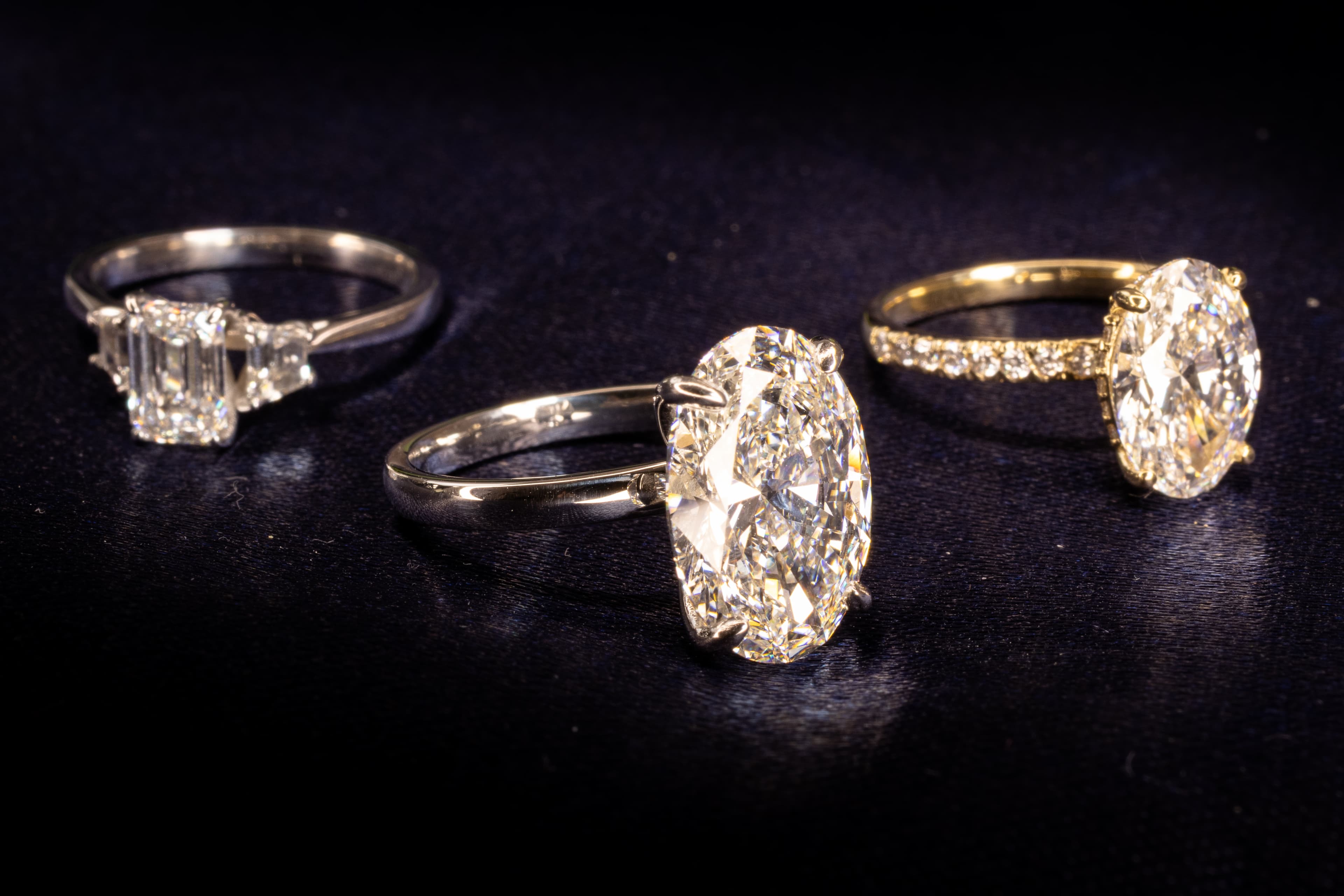
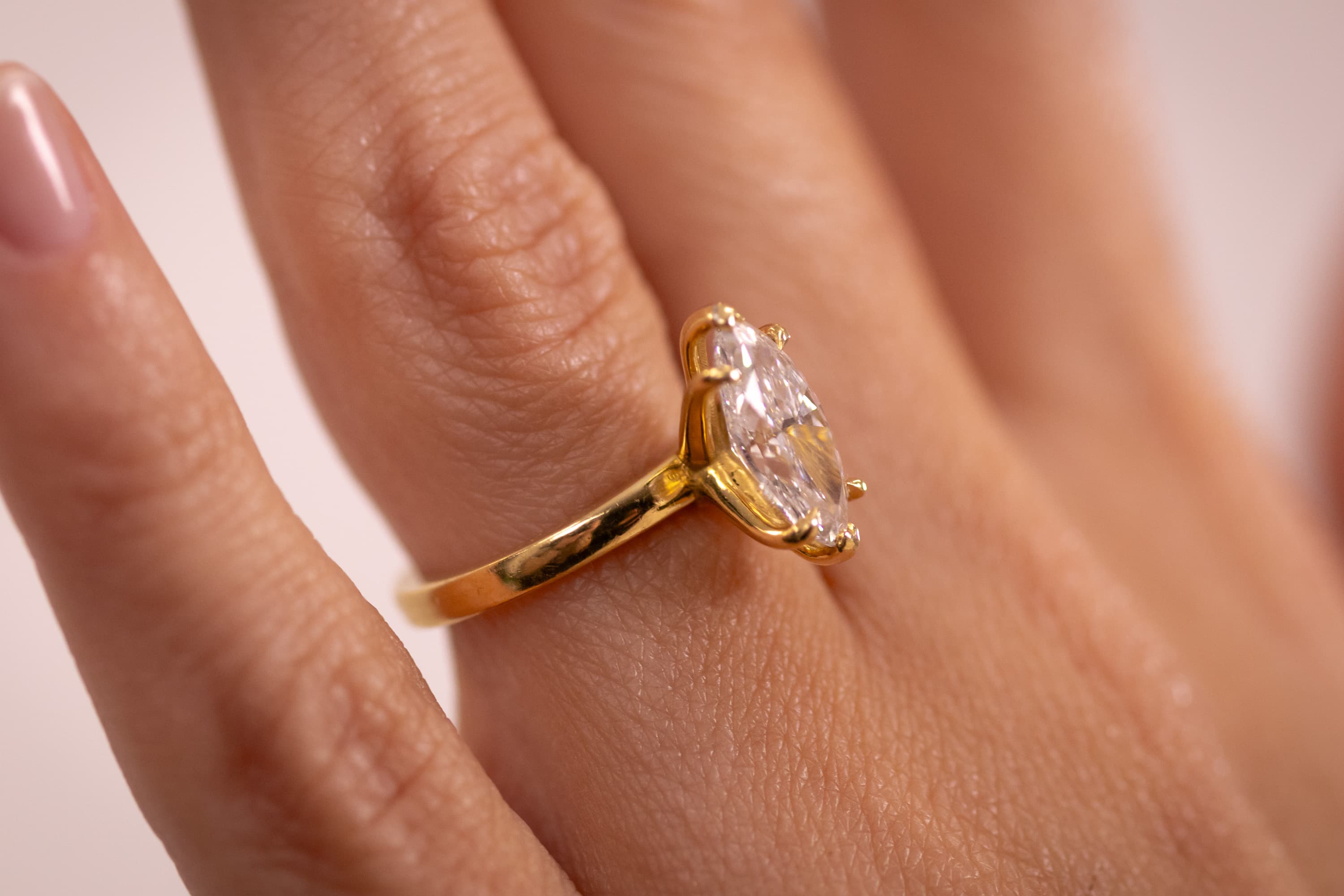
Oval and elongated cuts (oval, pear, marquise) dominate because they flatter the finger and read larger per carat than a round brilliant — a natural fit with lab-grown, where carat cost is no longer the limiting factor. Demand has held over several years rather than spiking for one season, so dating risk is low. The moval — a marquise-oval hybrid — is worth a look too; see what a moval diamond is. If you are unsure which shape suits your partner, we have a shape-matching walkthrough. Best for buyers who want presence without a round-brilliant look.
Antique and old-cut revival — old mine cut, old European cut, with Art Deco and Edwardian detailing like milgrain and filigree — has moved from estate-jewellery niche to one of the most-requested centre-stone looks. The appeal is a softer, candlelight sparkle rather than the sharp fire of a modern brilliant. Crucially, you do not need to hunt down an actual antique stone: labs now cut lab-grown diamonds in old-mine and old-European facet patterns specifically for this demand. It is a century-old aesthetic, so it resists trend cycles. Our old mine cut guide goes deeper. Best for buyers wanting heirloom character without inheriting an heirloom.
East-west settings turn a stone on its side, set horizontally rather than vertically, which makes familiar shapes like oval and emerald read as more modern and minimalist. It is a deliberate style choice rather than a default, so expect moderate dating risk. Best for buyers already leaning fashion-forward who are comfortable with a less expected look.
Personal touches: sparkle and colour
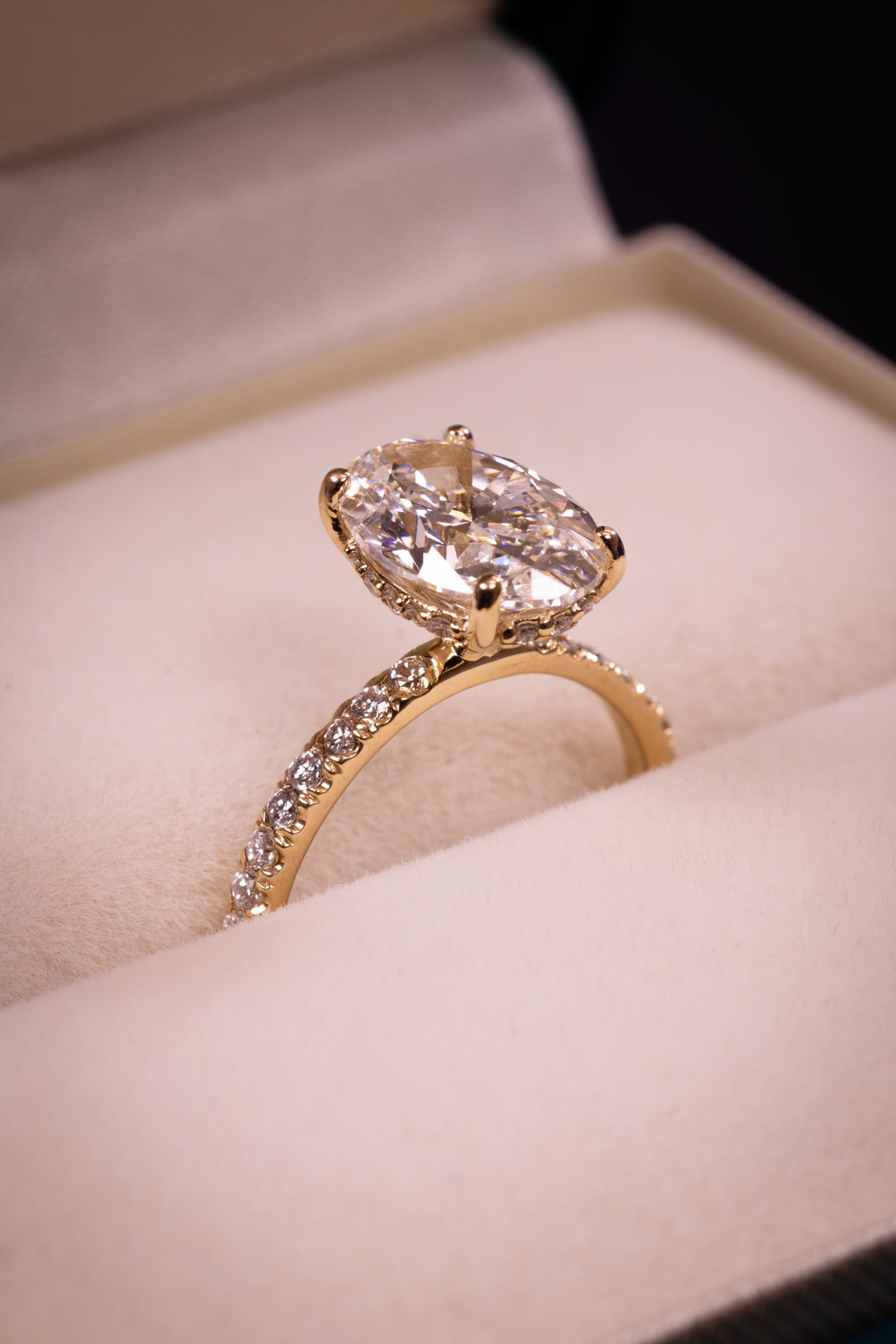
Hidden halos tuck a ring of small diamonds under the crown, out of sight from above, so the ring keeps a clean solitaire face with a secret sparkle from the side. It is essentially a stealth upgrade to the most classic silhouette there is, which makes it the lowest dating risk on this list. Best for traditionalists who still want extra brilliance and perceived size.
Coloured accents — sapphires (softer and parti tones), champagne diamonds and yellow diamonds — are up as buyers choose personality over a plain white centre. Two honest caveats. First, dating risk varies by shade: teal sapphire, the darling of the early 2020s, is already cooling in trade commentary in favour of lighter and parti tones, so it is the one most likely to look dated soonest. Second, durability is not the trade-off — a champagne diamond is structurally identical to a white one, and sapphire is 9 on the Mohs scale — but resale and appraisal values for coloured stones are less established than for white diamonds, worth knowing if value matters to you. Best for buyers prioritising individuality.
Toi et moi rings pair two stones — often two shapes, or a diamond with a colour stone — in an asymmetric design symbolising two people. Interest has grown strongly over several years, but it is a distinctive fashion statement rather than a structural classic, so it will likely read as a 2020s ring in hindsight. That is not a flaw if the story matters more than neutrality. Best for couples wanting a personal or symbolic design, including blended-family and non-traditional narratives.
The lab-grown effect: bigger centre stones
The single biggest change the price collapse enabled is size. Average lab-grown centre stones have grown from around 1.3 carats a few years ago into roughly the 1.8 to 2.5 carat range today, depending on the survey — the same budget simply buys more carat weight. Trade press frames this as couples trading up in size and quality rather than pocketing the saving. Just keep the stabilising-price note in mind: this is a good time to size up, not a reason to wait for a cheaper next year. We unpack the trade-up logic in why couples choose bigger lab-grown stones.
Gotchas worth knowing before you buy
GIA changed how it grades lab-grown diamonds. From 1 October 2025, GIA dropped the full 4Cs letter-and-number scale for lab-grown stones in favour of two tiers, "Premium" and "Standard". IGI — which certifies most lab-grown stones sold in Australia — still issues full 4Cs reports, so a new-format GIA lab-grown report and an IGI report are no longer directly comparable. Do not expect a post-cutover GIA cert to read "VS1, F colour". Our certificates guide and 4Cs guide explain what to read on each.
Trend statistics are mostly marketing. Figures like "toi et moi up 180%" usually come from retailer content blogs, not audited panels. Treat them as directional colour, not proof.
Common questions
What is the biggest engagement ring trend in Australia for 2026?
Larger lab-grown centre stones set the direction, with bezel settings, chunky gold bands and oval cuts as the most-requested specific looks. Lab-grown is now a first-choice option for many buyers, not a budget fallback.
Which 2026 trends are least likely to date?
Bezel settings, hidden halos, oval and elongated cuts, and the antique-cut revival — each is either a revived classic or a quiet upgrade to a timeless silhouette. Toi et moi, east-west and teal sapphire are the bolder, higher-risk choices.
Are engagement rings cheaper in 2026?
Not across the board. Lab-grown diamonds are far cheaper than a few years ago, but gold prices rose sharply, so metal-heavy designs like chunky bands and bezels actually cost more. The saving is in the stone, not the metal.
Do I need an antique stone to get the antique look?
No. Labs now cut lab-grown diamonds in old-mine and old-European facet patterns, so you can get the candlelight sparkle of an antique cut in a new, certified stone without sourcing estate jewellery.
Is teal sapphire still in style?
It is cooling. Trade commentary points to lighter, parti and soft-green sapphires taking over, so teal is the coloured-accent choice most likely to look dated soonest.
Will lab-grown prices keep falling if I wait?
Unlikely to fall much further. Prices have decelerated and gone uneven in 2026, with some sizes rising quarter on quarter near a production-cost floor. It is historically cheap now rather than mid-crash.
The rings that age best in 2026 tend to pair a trend you love with a silhouette you can live with for decades. If you want a second opinion on that balance, book a consultation with our Melbourne studio, browse current designs in our engagement ring collection, or have us source a stone to your exact spec, including antique-cut and coloured options.