
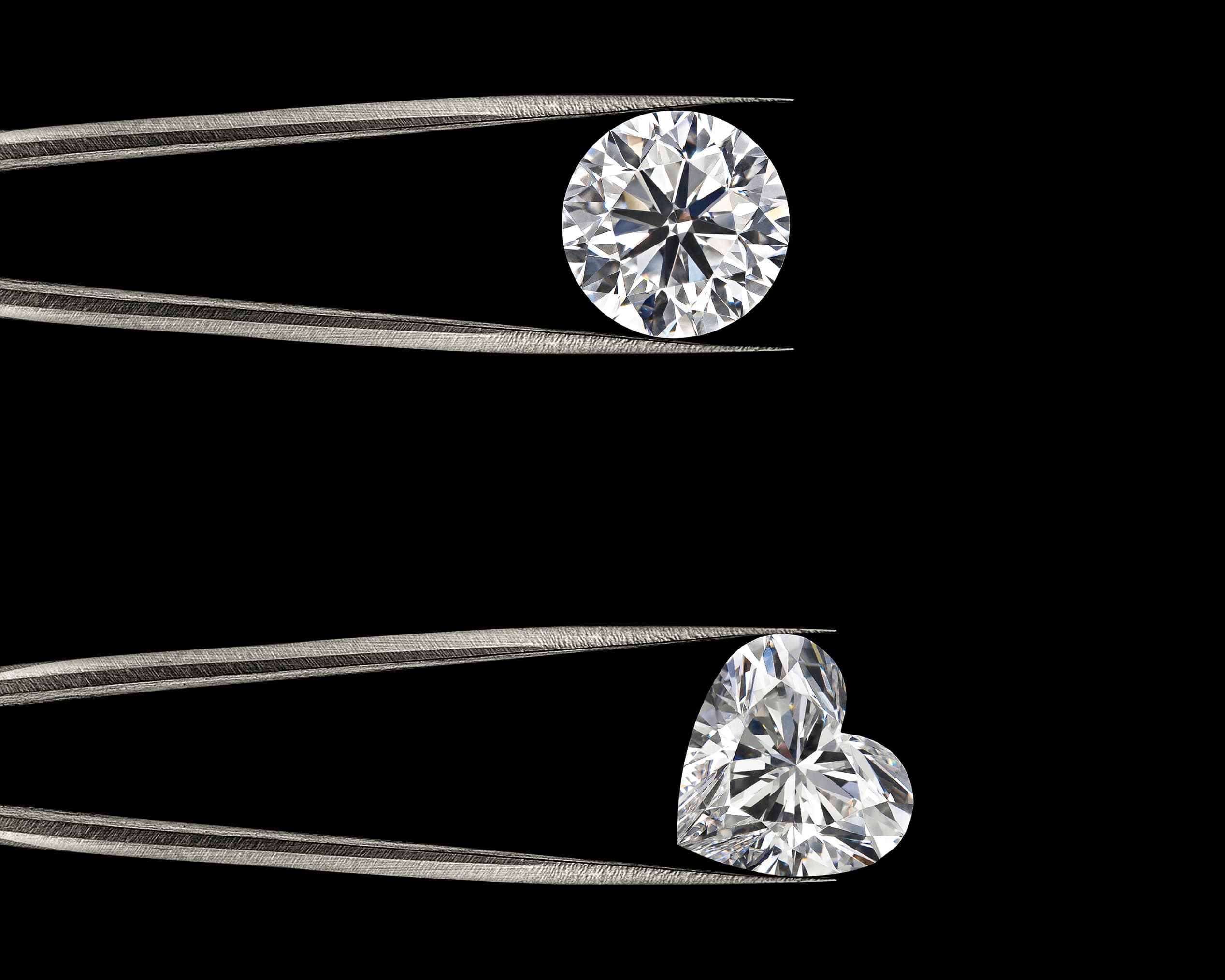
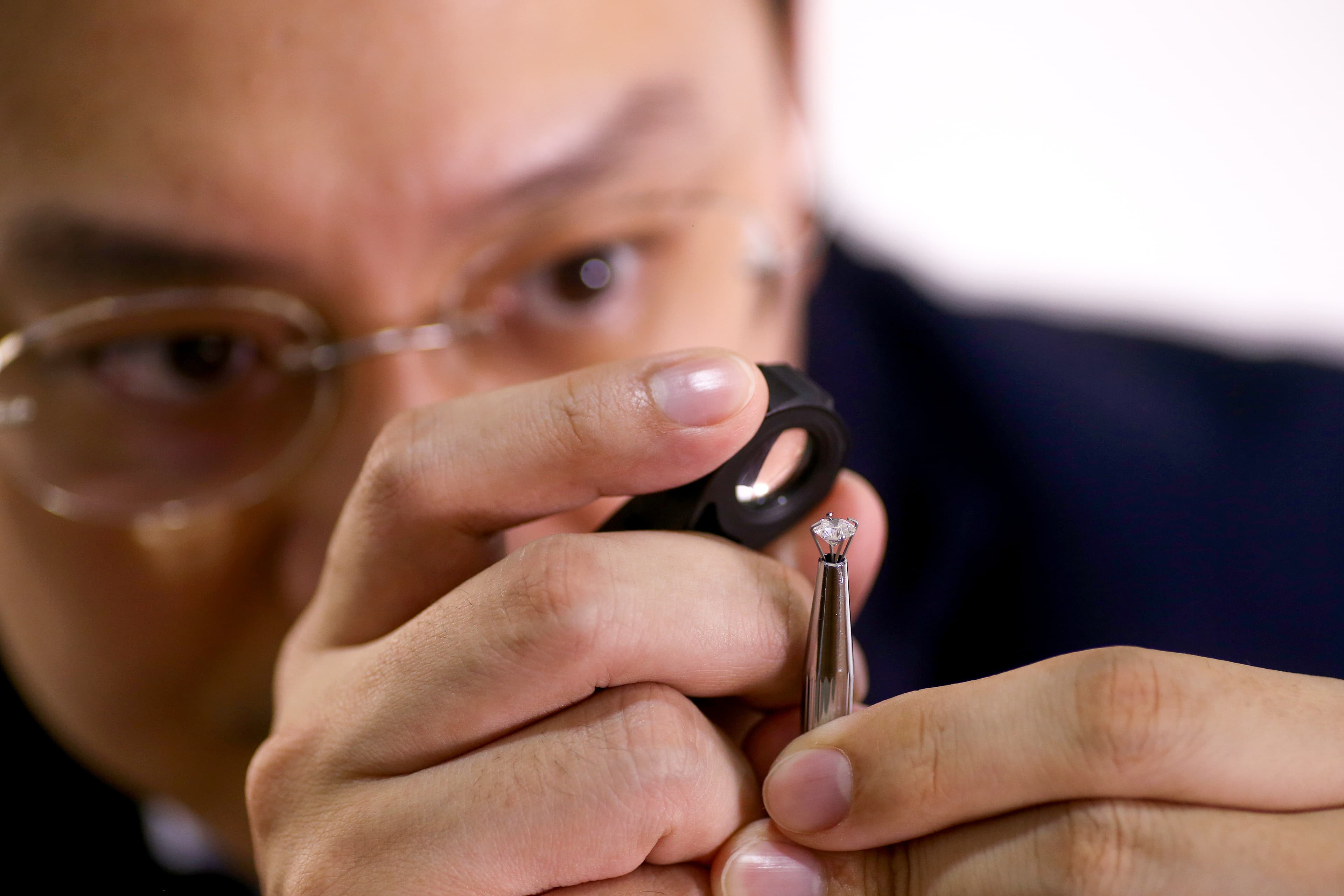
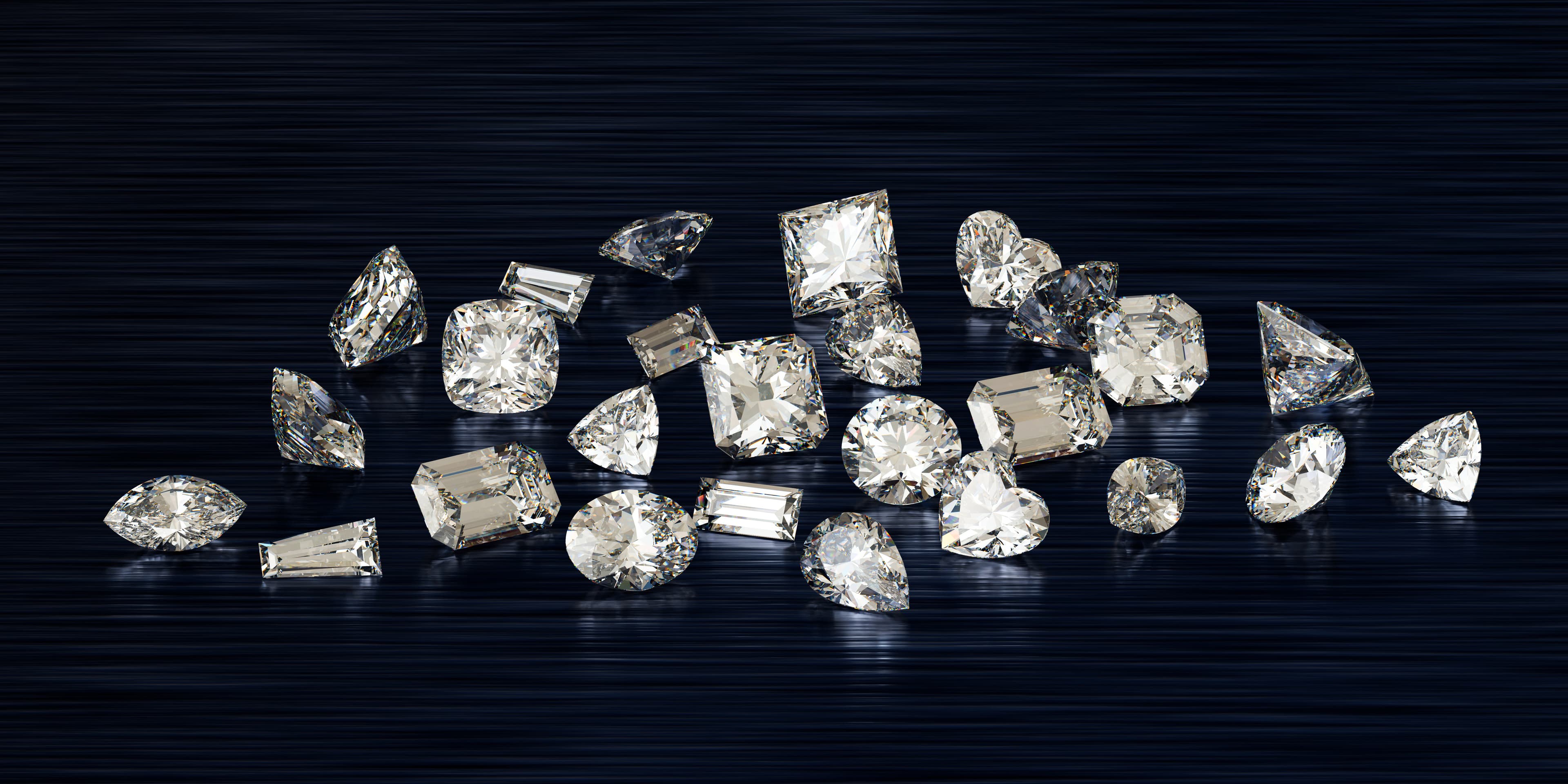
The 4Cs — cut, colour, clarity and carat — are the shorthand the whole diamond trade uses to describe a stone's quality. Every grading report from a laboratory like IGI or GIA is built around them, and at Savoir-Faire Jewellery every diamond we source is graded against them independently. But the 4Cs are a starting framework, not a score out of ten. Two diamonds with an identical grade on paper can look noticeably different in the hand, and the "highest" grade is rarely the smartest place to put your money.
This guide goes past the definitions. It covers what each C actually does to the way a diamond looks, where the grades genuinely matter, where you can save without anyone ever noticing, and the specific traps that catch people out — especially now that lab-grown diamonds have changed the maths. If you read one line, read this: prioritise cut, buy eye-clean, choose colour to suit your metal, and treat carat last. The rest is detail.
First, how the 4Cs actually work together
The single most useful shift in mindset is this: you are buying a stone, not a certificate. The report tells you what a trained grader measured under controlled lighting at 10x magnification. It does not tell you whether the diamond is beautiful, whether an inclusion is hidden or glaring, or whether a shadow runs through the middle. For that you need the stone's video, its proportions, and ideally a set of trained eyes.
The four factors also trade against each other. A great cut can rescue a middling colour grade by throwing more light. A brilliant-cut facet pattern can bury an inclusion that would be obvious in a step cut. A warm metal can make a lower colour grade vanish. Understanding those interactions is how you get a diamond that looks like it cost more than it did. We'll take the four in order of impact — which is not the order they're usually listed.
Cut: the one to never compromise
Cut is the most important C by a wide margin, and the one most people underrate because it's the hardest to reduce to a single letter. Cut is not the diamond's shape (round, oval, emerald) — it's how well the stone's facets are proportioned and finished to handle light. A superbly cut diamond returns light as brilliance (white sparkle), fire (flashes of colour) and scintillation (the flicker as it moves). A poorly cut one leaks light through the bottom and looks dull and glassy — and no colour or clarity grade can fix it.
Round brilliants: max it out, it's worth it
Round brilliant is the only shape with a genuine, formula-based overall Cut grade (Excellent/Ideal down to Poor), because its geometry is standardised. For a round, insist on an Excellent/Ideal cut with Excellent polish and symmetry — often written "Triple Excellent" or "3EX". This is the one grade we'd tell you to max out every time: the sparkle difference is visible across a room and the price premium is modest.
The fancy-shape trap: there is no cut grade
Here's the gotcha almost no one mentions. Only round brilliants receive an overall cut grade. Ovals, pears, emeralds, cushions, marquises and radiants are graded for polish and symmetry only — the report is silent on the thing that matters most. Two ovals can both read "Excellent polish, Excellent symmetry" while one is lively and the other lifeless. If you're buying a fancy shape you cannot lean on the certificate for cut. You judge it yourself using three things:
- Proportions — the table % and depth % on the report. Extremes in either direction usually mean light is leaking out.
- Length-to-width ratio — this sets the silhouette. It's taste rather than quality, but it's where a shape looks "right" or slightly off. Rough guides below.
- The video — non-negotiable for fancy shapes. Watch it face-up and in motion, looking for even sparkle across the whole stone rather than a dead patch.
| Shape | Pleasing length-to-width ratio |
|---|---|
| Round | 1.00 (perfectly round) |
| Oval | 1.35 – 1.50 |
| Emerald | 1.30 – 1.50 |
| Cushion | 1.00 – 1.10 square, 1.15 – 1.25 elongated |
| Pear | 1.45 – 1.70 |
| Marquise | 1.85 – 2.05 |
| Radiant | 1.00 – 1.10 square, 1.20 – 1.35 elongated |
Watch for the bow-tie
Elongated brilliant cuts — oval, pear and marquise especially — can show a bow-tie: a dark shadow shaped like a bow across the centre of the stone, caused by facets misdirecting light. Every elongated stone has some; a faint one is normal, a heavy black one is a permanent eyesore. It is never noted on the grading report. The only way to catch it is the video, or the stone in person. A well-cut oval that costs a little more but has no bow-tie is money far better spent than a colour or clarity upgrade.
Colour: buy it to suit your metal
Diamond colour is graded from D (completely colourless) through to Z (noticeably tinted), with the value — and the price — highest at the colourless end. The catch is that the difference between one grade and its neighbour is invisible to the naked eye, and often invisible even to a grader unless the stone is loose, upside down and beside a master set. Once a diamond is set in a ring and viewed the normal way (face-up, on a hand), colour is far subtler than the alphabet suggests.
The practical lever is your metal — see our gold vs platinum guide for the full comparison:
| Metal | Recommended colour | Why |
|---|---|---|
| Platinum / white gold | D – G | Cool white metal shows any warmth in the stone |
| Yellow gold | H – K | Warm metal masks colour; higher grades are wasted money |
| Rose gold | H – K | The pink hue hides tint entirely |
Two other things move the needle. Colour shows more in larger stones (more material to see through), so a 3ct stone justifies a slightly higher grade than a 0.7ct. And it shows more in step cuts (emerald, asscher) with their large open facets than in sparkly brilliant cuts, which break light up and disguise tint. Match the grade to the job rather than chasing D.
The lab-grown colour footnote
Most lab-grown diamonds already sit in the D-F band, so colourless is cheap and easy to get; there's little reason to accept a warm lab stone unless you specifically want it in yellow or rose gold. One caveat on reports: GIA stopped issuing D-Z colour grades for lab-grown diamonds in October 2025, replacing them with two broad tiers, "premium" and "standard". IGI — which grades the majority of lab-grown stones, and which we use — still gives the full D-Z letter. So don't try to compare a GIA "premium" against an IGI "E colour" as if they sit on the same axis; they don't.
Clarity: chase eye-clean, not flawless
Clarity grades the tiny internal features (inclusions) and surface marks (blemishes) that form as a diamond grows, on a scale from Flawless (FL) through Internally Flawless, VVS1/VVS2, VS1/VS2, SI1/SI2, down to Included (I1-I3). Almost all of these are microscopic. The number that matters to you is not the letter — it's whether the diamond is "eye-clean": free of anything you can see with the naked eye at normal viewing distance.
For most people VS1-VS2 is the comfortable sweet spot, and SI1 (sometimes SI2) is where the real value lives — often eye-clean at a meaningfully lower price. But eye-clean depends heavily on shape:
- Brilliant cuts (round, oval, cushion, pear) — busy sparkle hides inclusions well. SI1, and frequently SI2, can look flawless to the eye. Save here.
- Step cuts (emerald, asscher) — the large flat "hall of mirrors" table is like a clear window; inclusions have nowhere to hide. Go VS1 or better.
Two gotchas the grade letter won't tell you. First, location and type matter more than the grade. An SI1 with its inclusions tucked near the girdle can look cleaner than a VS2 with a single dark crystal sitting under the table. Read the plot on the report — or better, the video — and see where the inclusions sit. Second, watch for feathers (small internal fractures) that reach the surface at a corner, edge or point, particularly on pears and marquises; that's a durability question, not just a cosmetic one. Eye-clean and structurally sound beats a higher letter every time.
Carat: weight is not size
Carat is simply weight — one carat is 0.2 grams — and it's the C people fixate on because it's the number everyone understands. But weight and face-up size are not the same thing, and confusing them is the most common way to overspend.
What you actually see from above is the stone's spread — its millimetre dimensions. A well-cut 1.0ct round is about 6.5mm across; a deep-cut 1.0ct can measure 6.1mm and simply look smaller, because the extra weight is buried in the pavilion where no one sees it. Always check the mm measurements on the report, not just the carat number.
Dodge the magic sizes
Prices jump at the round-number thresholds — 0.50, 1.00, 1.50, 2.00ct — because that's what people search for. A 0.90ct sits just under the 1.00ct cliff and is indistinguishable face-up, yet costs less per carat; the same goes for 1.90 versus 2.00. Buying a hair under a magic size is one of the oldest value tricks going. For lab-grown the premium at these thresholds has shrunk as prices have fallen, but it hasn't vanished — it's still worth a look.
Make carat look like more
- Elongated shapes (oval, pear, marquise, emerald) carry their weight across a larger face-up area, so they look bigger per carat than a round.
- Setting choices — a halo or hidden halo frames the stone and can add the visual impact of half a carat.
- Thin bands and low baskets make the centre stone read larger by comparison.
The lab-grown reality check
If you're considering a lab-grown diamond — and most of our clients are — the 4Cs still apply in exactly the same way, but the economics have changed so dramatically that some traditional advice is now out of date.
Prices have fallen roughly 80-85% since 2020 as global growing capacity scaled up, and by 2026 they've largely stabilised rather than continuing to slide. The consequence is liberating: the old logic of "sacrifice colour and clarity to afford the carat you want" barely applies anymore. Top colour and clarity are now cheap enough that you can simply have them. So the smart play flips — put your money into cut and spread, take D-F colour and VS clarity because they cost little extra, and don't pay yesterday's prices for grades that are now inexpensive.
Two things to keep your feet on the ground:
- It's a keepsake, not an investment. Lab-grown diamonds resell for only around 10-15% of their purchase price, and many jewellers won't buy them back at all. Buy the ring you love to keep, and insure it at replacement value, not resale.
- Certification is not optional. Buy only stones with an independent report from IGI or GIA and a matching laser inscription on the girdle you can verify. Growth method (HPHT or CVD) is disclosed on the report and makes no difference to how the diamond looks — ignore it as a buying factor.
For a deeper look at reading a report and which laboratories to trust, see our guide to diamond certificates for Australian buyers.
Putting it together: our priority order
There's no universally "correct" combination — only the right balance for your eye and your budget. But handed a fixed budget, this is the order we spend it in:
| Priority | Spend on | Happily save on |
|---|---|---|
| 1. Cut | Excellent/Ideal for rounds; verified proportions and no bow-tie for fancy shapes | Never compromise here |
| 2. Clarity | Eye-clean for your shape (SI for brilliants, VS+ for step cuts) | Flawless and VVS grades you can't see |
| 3. Colour | A grade matched to your metal | Chasing D colour in yellow or rose gold |
| 4. Carat | Spread (mm) and a hair under the magic sizes | Raw weight you can't see face-up |
A sensible, great-value lab-grown spec for a yellow-gold oval solitaire, as an example: around 1.8-1.9ct, well cut with a clean video and no bow-tie, H colour, SI1 clarity, IGI-certified. On paper it's mid-range; in the hand it looks like a flawless two-carat — and it costs a fraction of what those grades did five years ago.
Before you buy: a quick checklist
- Independent grading report from IGI or GIA — never an in-house "certificate" or a valuation/appraisal, which are not grading reports.
- A laser inscription on the girdle matching the report number, verifiable on the laboratory's website.
- A high-resolution video (and ideally ASET or Ideal-Scope images), especially for fancy shapes.
- Eye-clean confirmed for the shape, with inclusions well placed and no surface-reaching feathers on points.
- Cut maxed out for rounds; proportions and bow-tie checked personally for fancy shapes.
- Colour appropriate to your metal, not simply the highest grade.
- mm measurements checked, not just carat — and a look just under the next magic size.
- Compare like with like: only ever compare two stones graded by the same laboratory.
Red flags
- A price that looks too good. It usually means soft grading from an unfamiliar laboratory, or an inclusion or tint the photos hide.
- No video and no inscription. Walk away — you're buying blind.
- "Certified" by the seller themselves, or an appraisal presented as a grading report. Insist on an independent laboratory.
- Stones shown only under bright in-store spotlights, which flatter every diamond and hide dullness. Ask to see it in ordinary light.
Common questions about the 4Cs
What are the 4Cs of a diamond?
The 4Cs are cut, colour, clarity and carat — the four characteristics every laboratory uses to grade a diamond. Cut is how well the stone is proportioned to return light, colour is how close to colourless it is, clarity is how free it is of inclusions, and carat is its weight.
Which of the 4Cs is most important?
Cut, by a wide margin. It has the biggest effect on how a diamond looks because it governs sparkle; a poorly cut stone looks dull no matter how good its colour and clarity. Prioritise cut first, then buy eye-clean clarity and a colour that suits your metal.
What does "eye-clean" mean?
Eye-clean means a diamond has no inclusions visible to the naked eye at normal viewing distance, even if the report shows them under 10x magnification. For brilliant cuts an SI1 (sometimes SI2) is often eye-clean and far better value than a flawless grade you can't see.
What is the best diamond colour for a yellow gold ring?
H to K. Warm yellow (and rose) gold reflects into the stone and masks any faint tint, so a lower colour grade faces up beautifully and saves money. Reserve the near-colourless D-G grades for platinum and white gold, where the cool metal shows colour more.
Is IGI or GIA better for a lab-grown diamond?
Both are reputable. The practical difference since October 2025 is that GIA now grades lab-grown diamonds as "premium" or "standard" rather than giving D-Z colour and FL-I3 clarity, while IGI still issues the full 4Cs letters — which makes stones easier to compare. Whichever you choose, buy on the report plus the video, and only ever compare two stones graded by the same laboratory.
What is the best value grade combination?
For a lab-grown brilliant cut, a well-cut stone in H colour and SI1 clarity, bought a hair under a magic size (say 1.9ct rather than 2.0ct), gives you the look of a much higher-graded diamond for far less. Spend on cut and spread; save on grades no one can see.
Get these four factors into the right balance and you'll have a diamond that looks superb, wears well and doesn't waste a dollar on grades no one can see. When you're ready, you can have us source stones to your exact spec, browse our engagement ring collection, or book a free consultation and we'll walk through real options with you — report and video in hand.