
An engagement ring's setting style is the way the metal cradles and frames the centre diamond — the small piece of architecture that decides how big the stone looks, how much it sparkles, how safe it is, and how the ring wears day to day. At Savoir-Faire Jewellery we make every style below in our Melbourne workshop, in both lab-grown diamonds (our default) and natural stones, so this guide is written to help you match a setting to a hand and a lifestyle — not just to a photo you liked. If you take one thing from it: choose your setting by lifestyle first and looks second, because that single filter removes most of the settings that would frustrate you later.
Below we walk through the ten settings people actually ask for — solitaire, halo, hidden halo, bezel, pavé, three-stone, toi et moi, east-west, cathedral and tension — with an honest read on who each one suits, what it costs you in upkeep, and how it pairs with a wedding band. We flag the gotchas most shops skip: prong count as a security decision, the halo's ongoing maintenance, and the settings that quietly commit you to a custom-shaped wedding band.
Start with your lifestyle, not the mood board
The most useful question is not "which style is prettiest" but "what do these hands do all day?" A setting that's perfect on a desk worker can be a daily snag hazard for a nurse, a chef or someone in the gym. Get this right and every other choice gets easier.
- Hands-on, active or manual work (healthcare, hospitality, trades, parents of small children, frequent travellers, gym-goers): favour a bezel or a low-set six-prong. Low profile, minimal snagging, maximum protection.
- Desk work and gentler days: you can wear a higher-profile halo, cathedral or tension setting without the practical downsides really mattering. Height and drama are yours to enjoy.
This is the "what truly matters" call. Everything after it — halo versus solitaire, four prongs versus six, this shape versus that — is refinement on top of a setting that already fits your life.
Prongs: four versus six, and why it's not just a look
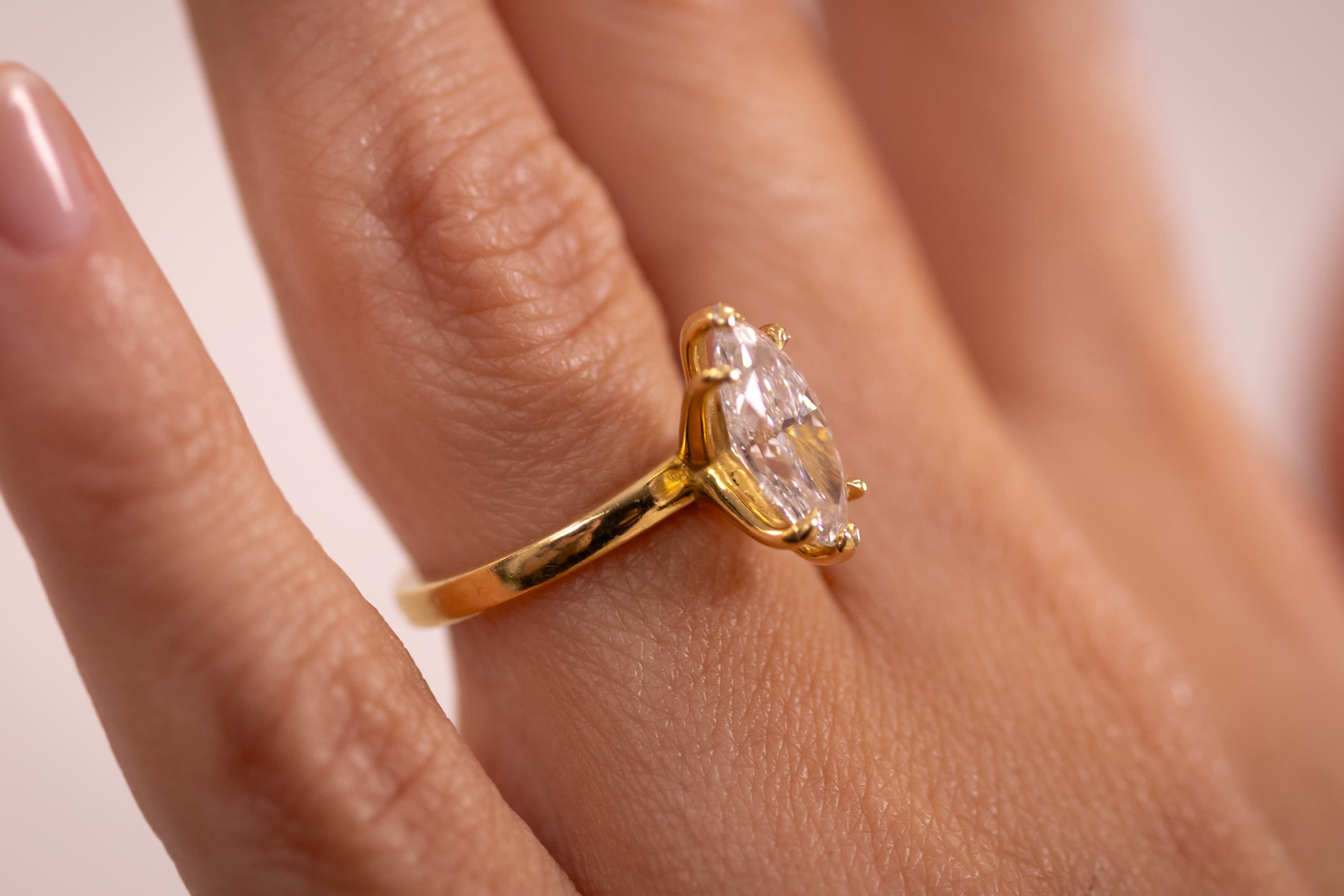
Prongs are the little metal claws that grip the stone, and the count is a genuine security trade-off rather than pure aesthetics.
- Four prongs show more of the diamond and read as modern and minimal — but there's less metal holding the stone, so more of the girdle is exposed to knocks and snags. Best on smaller, tougher stones and calmer lifestyles.
- Six prongs cover a touch more of the stone but hold it materially more securely. This is the right call for larger carats, for fracture-prone shapes like emerald and pear cuts, for stones with inclusions near an edge, and for active wearers.
If you're unsure, six low-set prongs is the safe default. And whichever you choose, prong condition is what an annual check-up is really watching — see our jewellery care guide. Bear in mind cut quality matters far more than prong count for sparkle, which we cover in the 4Cs of diamonds.
Solitaire: the timeless default
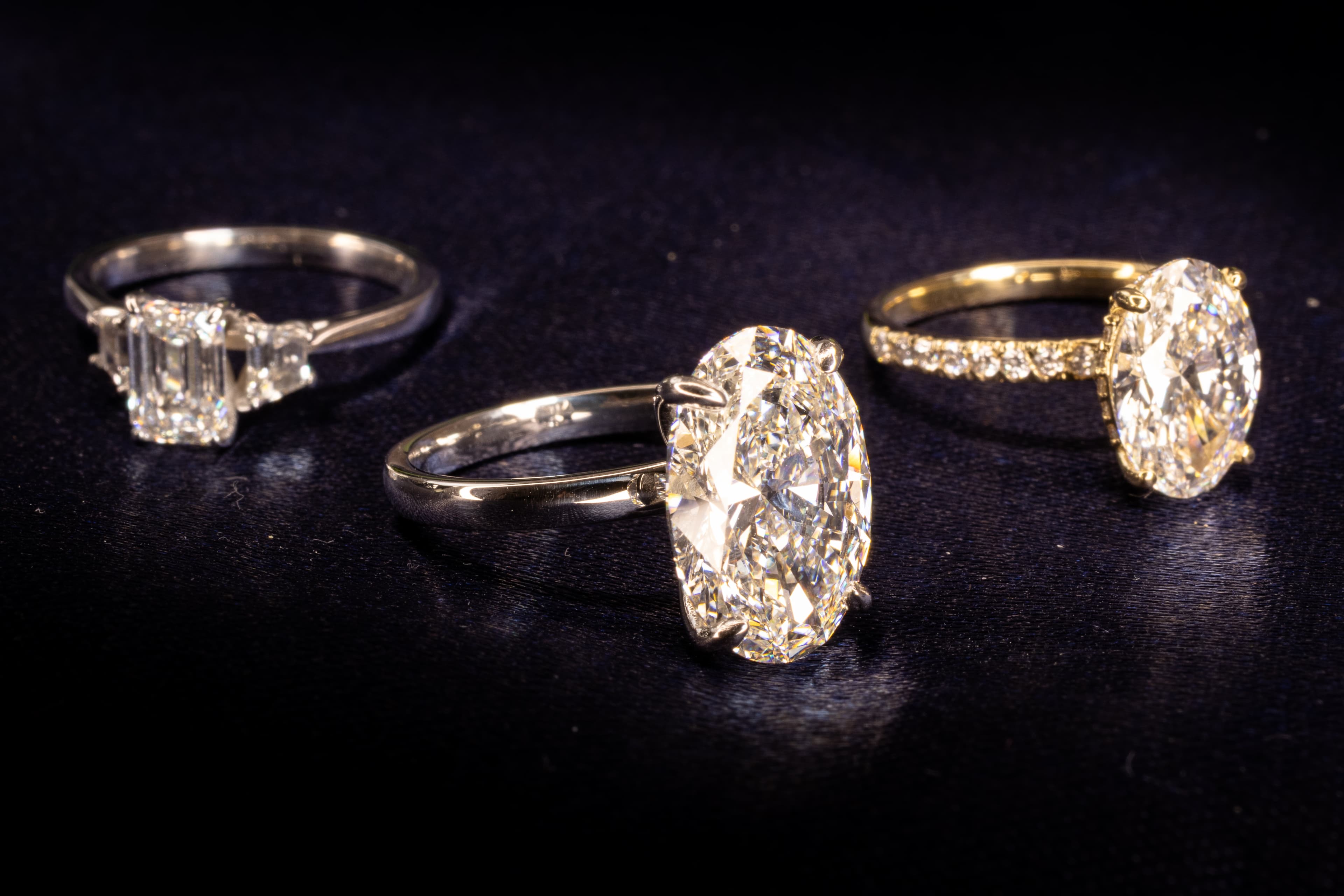
The look: a single diamond on a clean band, nothing competing for attention. Who it suits: almost anyone — it's the most versatile style there is and never dates. Wearability: excellent, especially on a thin band with a low setting. A plain straight wedding band sits flush against most solitaires with no custom shaping, which makes it the easiest style to pair later. Its one trade-off is honesty: with no halo or side stones to help, the centre stone carries the whole ring, so it rewards spending on cut and spread. Solitaire is still the single most common style in Australia, though its share is slowly giving way to bezels and halos.
Bezel: 2026's practical-luxury pick
The look: a full metal rim wraps right around the diamond's edge for a smooth, modern, almost architectural profile. Who it suits: anyone hands-on — this is genuinely the best setting for snag-free, protected daily wear, which is why nurses, teachers, chefs and gym-goers gravitate to it. Pros: maximum stone protection and nothing to catch on clothing or gloves. Cons: the rim lets slightly less light in from the sides, so a bezel sparkles a touch less than an open prong setting, and it can read marginally bulkier. It pairs cleanly with a straight band. Bezel is the breakout setting of 2026 — its rise is substance, not spin — and it fits the trend toward a bigger lab-grown centre stone in a low-key mount rather than a large, ornate one; more on that in why couples are choosing bigger lab-grown centre stones. One cost note: a full bezel uses more metal than a few prongs, and with gold near record highs in 2026 that can nudge the price up — see rising gold prices.
Halo and hidden halo: more sparkle, one real upkeep note
Halo
The look: a ring of tiny pavé diamonds circles the centre stone, framing it and making it read up to roughly half a carat larger. Who it suits: anyone who wants maximum presence per dollar, particularly on calmer-handed lifestyles. The gotcha most shops skip: those little melee stones sit low in tiny beads and are the most common source of "lost stone" repairs, so a halo needs a prong and melee check roughly every 6-12 months. That's a real maintenance item, not an upsell — factor it in. Halos also usually need a contoured or notched wedding band to sit flush.
Hidden halo
The look: the same ring of small stones, but tucked under the centre stone's girdle so it's invisible from above — a clean, solitaire-like face-up view with a flash of sparkle only from the side. Who it suits: people who want a size and sparkle boost without a busy top-down look; it's replacing the oversized maximalist halo as the current favourite. The catch: it carries the same 6-12 month melee-check need as a visible halo, but because the stones are out of sight, a loose one is harder for you to spot — so don't skip the professional checks.
Pavé: sparkle worked into the band
The look: rows of small diamonds set low into the band itself, so the whole ring shimmers rather than just the centre. Who it suits: a cost-effective way to add sparkle without paying for centre-stone size. The trade-offs: each little stone is its own small loose-stone risk, and — importantly — a pavé band is harder and pricier to resize, because working the shank can disturb the stones near the cut point. If your ring size might change over the years (weight shifts, pregnancy), flag that upfront and talk to us about where the pavé stops. Our complimentary resize within 12 months covers the early adjustments; see our warranty.
Three-stone and toi et moi: romantic and on-trend
Three-stone (trilogy)
The look: a centre diamond flanked by two side stones — traditionally read as past, present and future. Who it suits: people who want more presence and symbolism than a solitaire. The modern version is having a comeback built on mixed shapes and gentle asymmetry (often over a hidden halo) rather than three matched rounds. Wearability: the wider footprint and raised shoulders usually mean a contoured or custom band is needed to nest without a gap.
Toi et moi
The look: French for "you and me" — two stones set side by side or overlapping, often in contrasting shapes like an oval and a pear. Who it suits: couples drawn to a distinctive, story-led ring; searches and saves for it have surged over the last three years. The honest caveats: it's the least beginner-friendly style to resize (the two-stone alignment can shift) and it rarely pairs with a straight band. Beautiful and on-trend, but plan the wedding-band and resizing conversation upfront rather than treating it as consequence-free. You'll find more current directions in our 2026 engagement ring trends.
East-west: a modern turn
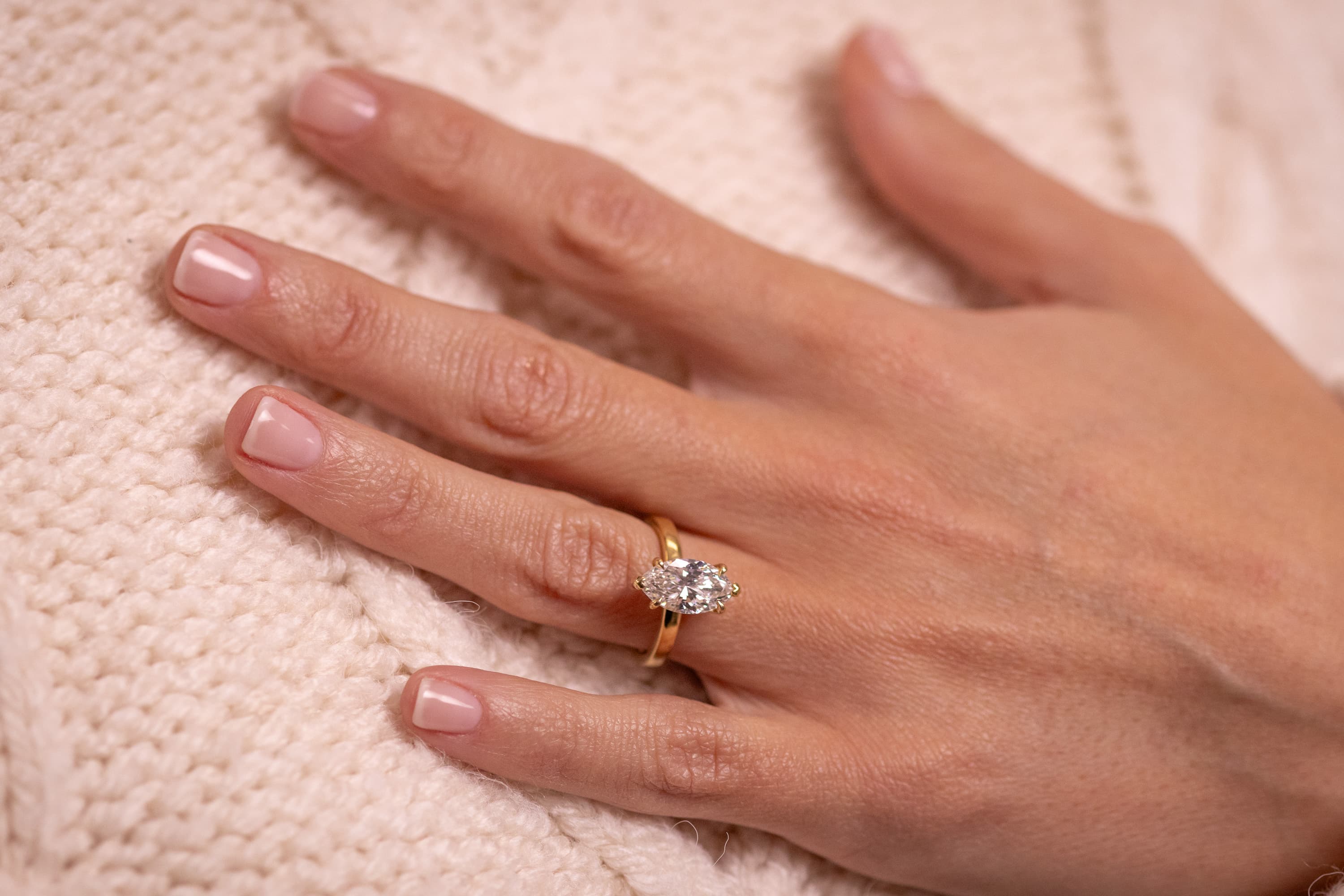
The look: an elongated stone (oval, marquise, emerald or pear) set across the finger instead of up and down it — an easy, minimalist way to stand apart. Who it suits: anyone wanting something contemporary without going ornate. Watch-outs: prong placement at the tips is less standardised for this orientation, so ask specifically about tip protection on pointed cuts, and expect it to sit less flush with a standard straight band than a vertically-set stone — a shaped band is often the answer.
Cathedral: height and drama
The look: arches of metal sweep up from the band to lift the centre stone, giving a dramatic, high profile with light coming in from the sides. Who it suits: gentler-handed wearers who want presence and a stone that catches the light. Trade-offs: that height raises snag risk, so it's less ideal for very active lives, and the raised gallery rarely sits flush with a straight band — the same shaped-band caveat as the halo. The extra metal in the arches also carries a little more cost when gold prices are high.
Tension: striking, but a specialist commitment
The look: the stone appears to float, held by spring pressure between the two ends of the band with no visible prongs — the most light into the stone of any setting. Who it suits: design-led buyers who want something genuinely different and don't expect to resize often. The commitments to understand before you buy: most general jewellers can't safely resize or re-tension one and will send it back to the maker, so repairs and resizes take longer; it's a poor fit for softer stones; and because the setting is usually the widest point of the ring, a flush straight wedding band is difficult. Wonderful if you go in eyes-open, frustrating if you don't.
The wedding-band question to settle before you buy
This is the planning mistake we see most: someone buys a beautiful engagement ring, then separately orders a plain straight wedding band and finds it won't sit flush — leaving an awkward gap or a costly do-over. Plain straight bands only nest neatly against solitaires and simple bezels. Settings with raised shoulders, curved galleries or an asymmetric footprint — halo, three-stone, cathedral, east-west and toi et moi — usually need a contoured, notched or custom-shaped band. The fix is simple: design or buy both rings together, or at least confirm the band before ordering. Our wedding ring guide covers matching in detail, the ring size finder helps you get sizing right the first time, and our process shows how we design both rings as a pair.
Setting styles at a glance
| Style | Best suited to | Wedding band |
|---|---|---|
| Solitaire | Any lifestyle; most versatile | Straight, flush |
| Bezel | Active, hands-on wear | Straight, flush |
| Halo | Sparkle-lovers, calmer hands | Usually contoured |
| Hidden halo | Clean look, subtle size boost | Often contoured |
| Pavé | Extra sparkle, stable ring size | Depends on shank |
| Three-stone | Presence and symbolism | Usually contoured |
| Toi et moi | Story-led, on-trend | Contoured or custom |
| East-west | Modern, minimalist | Often shaped |
| Cathedral | Height, gentler lifestyles | Usually shaped |
| Tension | Design-led, rare resizing | Difficult or custom |
What matters, and what's nice-to-have
What matters: a setting that fits your lifestyle, a prong count suited to your stone, knowing a halo's upkeep before you commit, and sorting the wedding-band pairing before you order. Nice-to-have: the precise style label, whether the halo is visible or hidden, and the exact metal colour — all real choices, but ones you can make freely once the four essentials above are settled. Because we lean toward lab-grown diamonds, most clients can also put a larger, better centre stone into whichever setting they love — just compare stones on reports from the same lab, since a "GIA" and an "IGI" grade are no longer like-for-like for lab-grown; see diamond certificates explained.
Common questions about ring settings
What is the most secure engagement ring setting?
The bezel, because a full metal rim protects the stone's entire edge. Among prong settings, a low-set six-prong is the most secure. Both are the safest choices for active or hands-on wearers.
Which setting is best for an active lifestyle?
A bezel or a low-set six-prong solitaire. Both keep the profile low and snag-free and protect the stone from knocks, which is why bezels are the standout practical-luxury choice for nurses, tradespeople, parents and gym-goers.
Do halo rings need extra maintenance?
Yes. The small pavé stones around the centre are the most common lost-stone repair, so a halo needs a professional prong and melee check roughly every 6-12 months. A hidden halo needs the same checks, and because its stones sit out of sight, a loose one is harder to notice yourself.
Which settings need a curved or shaped wedding band?
Halo, three-stone, cathedral, east-west and toi et moi settings usually need a contoured, notched or custom-shaped band to sit flush, because of their raised or asymmetric profiles. Solitaires and simple bezels pair with a plain straight band. Settle this before ordering the band.
Is a four-prong or six-prong setting better?
Neither is universally better. Four prongs show more of the stone and look more modern but hold it less securely; six prongs are materially more secure and the right choice for larger stones, emerald or pear cuts, and active wearers. When in doubt, choose six low-set prongs.
Which setting makes a diamond look biggest?
A halo frames the centre stone and can add the visual impact of around half a carat, and a hidden halo does the same while keeping a clean face-up look. Thin bands and low baskets also make the centre stone read larger by comparison.
The right setting is the one that fits your stone, your hand and your life — and it's far easier to get right with the ring in front of you. When you're ready, book a consultation and we'll compare the settings on your shortlist in person, browse our engagement ring collection for a feel of each style, or have us source a stone to your exact spec.