
Lab-grown diamond prices have fallen so far — roughly 80-85% at retail since 2020 — that the same budget now buys a visibly larger centre stone than it did a few years ago. That is why so many couples coming to Savoir-Faire Jewellery, our Australian atelier, are choosing to size up rather than pocket the saving. Doing it without overspending is not luck; it comes down to a handful of deliberate choices — spend on cut, buy colour and clarity to suit the setting, pick a shape that spreads, and stop just short of the round-number weights that carry a hidden premium. Here is how each lever works, and where the traps are.
Why sizing up is the better-timed play in 2026
The price story is well known by now: Edahn Golan's widely tracked lab-grown wholesale price index is down about 96% since he began tracking it in 2018, and retail shelf prices have followed, if less cleanly. What is newer, and more useful, is where the falls are still happening. Through 2026 the overall decline has slowed — Q2 2026 was down about 13% year-on-year, a slower pace than the quarters before it and a sign prices are nearing a production-cost floor for good certified goods. But that average hides a split: 1-carat rounds actually firmed slightly (up around 1% year-on-year), while 1.50-1.99ct fell about 11% and 2ct stones fell about 20%. The remaining savings have moved to the bigger stones. Put plainly, sizing up is where lab-grown is still getting cheaper — so now is a well-timed moment to buy a larger centre, not the smallest carat you can defend.
For an Australian sense of scale, a well-cut 1ct round in G-H colour and VS clarity runs roughly A$700-1,500 at retail depending on the stone and its certification, GST included — a fraction of the 2020 price. Keep that retail range separate from the wholesale index figures above; they measure different points in the chain and should never be quoted as the same number. If the category is new to you, our ultimate guide to lab-grown diamonds and our lab-grown diamond explainer cover the fundamentals; this article is about spending the saving well.
First, make sure your stone has a report you can shop by
Almost every tactic below depends on reading specific grades — G colour, SI1 clarity — off a report, and that is where a recent change matters. From 1 October 2025, GIA stopped issuing detailed D-Z colour and FL-I3 clarity grades on new lab-grown submissions. A current GIA lab-grown report now says only "Premium" or "Standard" (or nothing), so it will not tell you the exact colour and clarity you are shopping for. IGI — which papers most lab-grown stock on the market — still issues the full traditional 4Cs report, with the colour scale, clarity scale, clarity plot, cut, polish and symmetry. So if you intend to shop by specific grades, insist on an IGI report (or a pre-October-2025 GIA report that still carries the old detail). Our diamonds are independently certified, primarily by IGI, and our certificates explainer walks through what to check.
Spend on cut first
Cut is the single C with the biggest effect on how a diamond looks — it governs how much light the stone returns, and a brilliant, well-cut stone reads brighter and often larger than a lazily cut one of the same weight. This is settled trade consensus, not a trend. The happy side effect of lab-grown's low base cost is that an excellent or ideal cut is now affordable rather than a stretch, so there is no reason to trade cut away to buy carat. Buy the best cut you can, then spend what is left on size. Our 4Cs guide explains how to read cut on a report — and why the video matters as much as the grade.
Chase spread, not carat
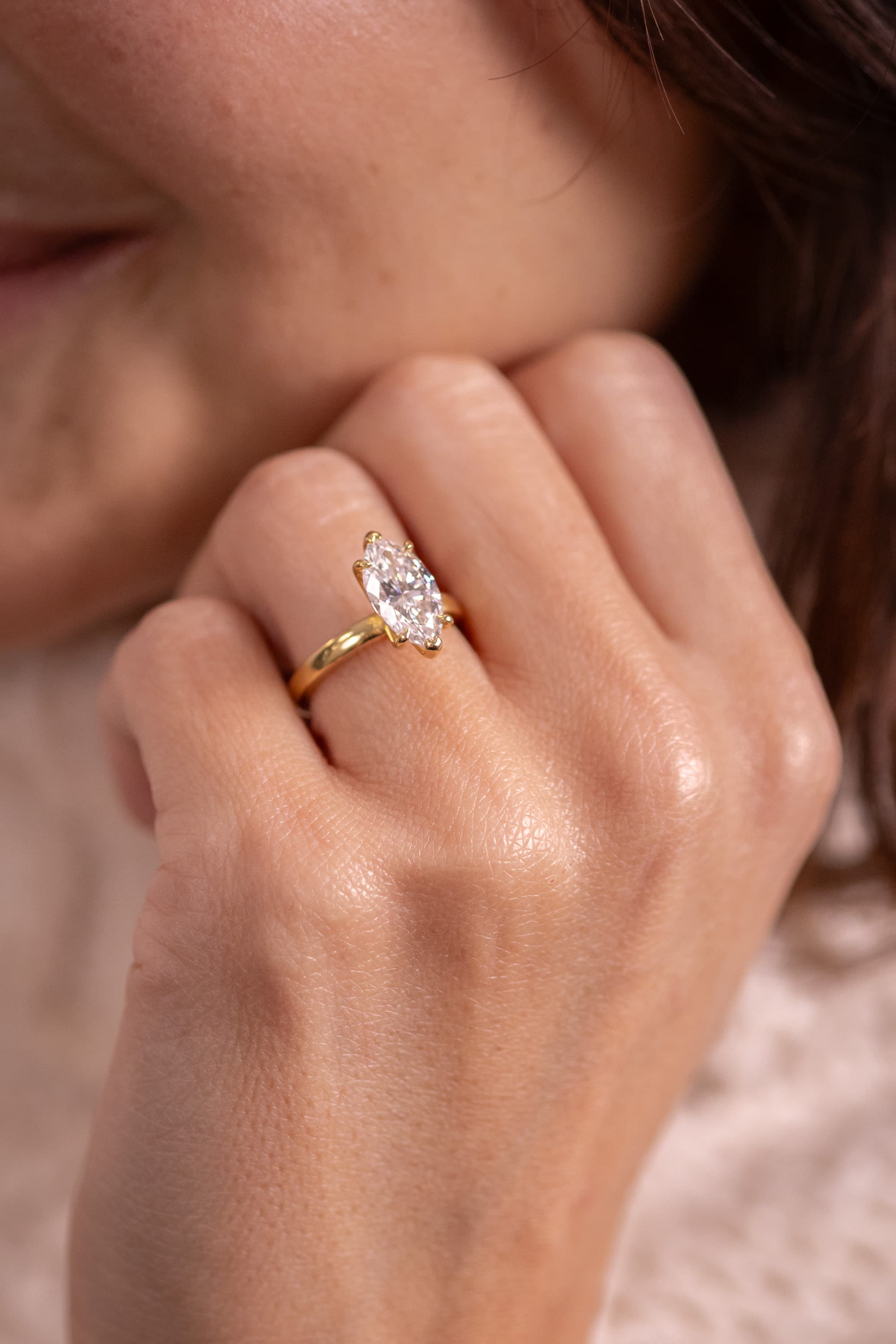
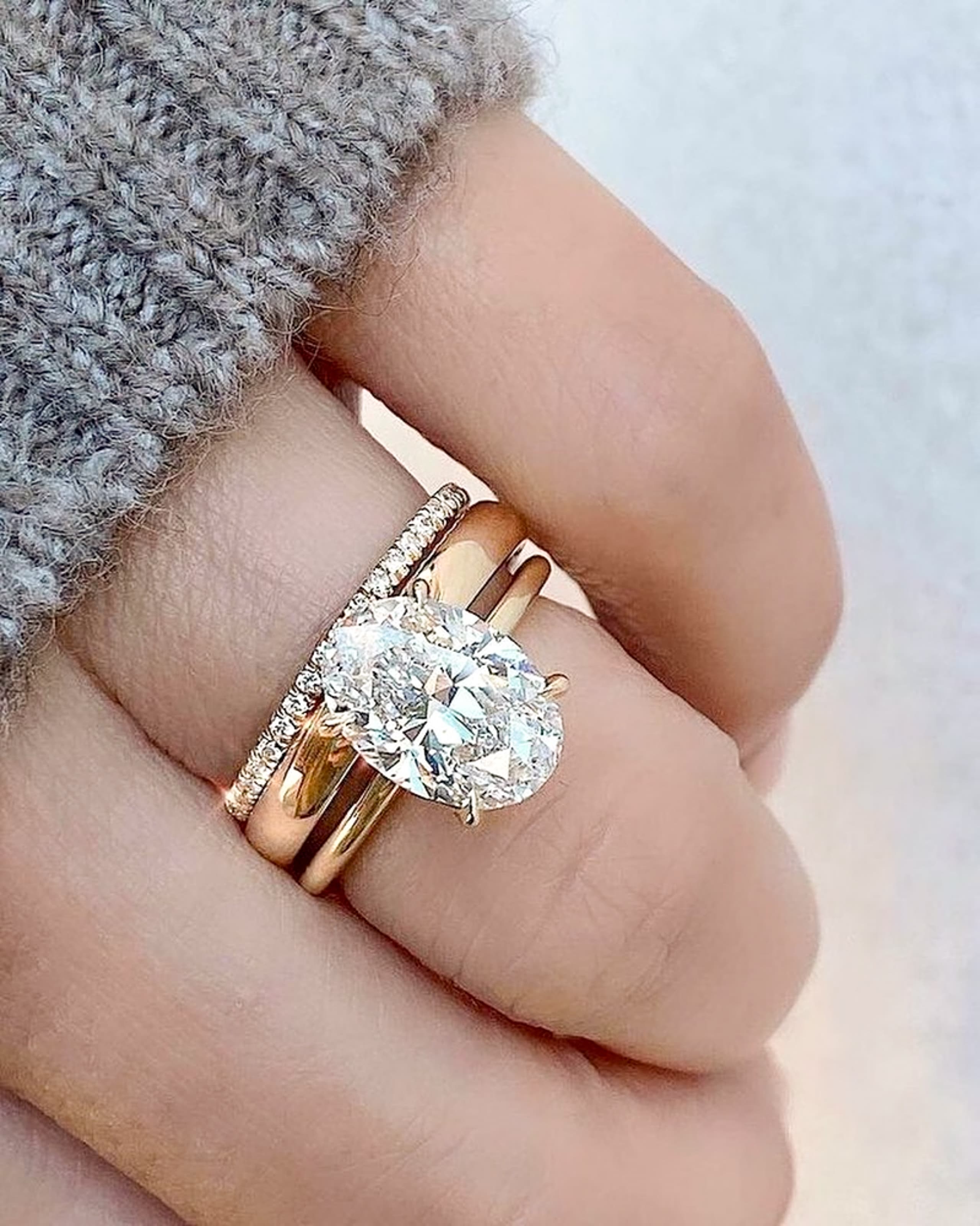
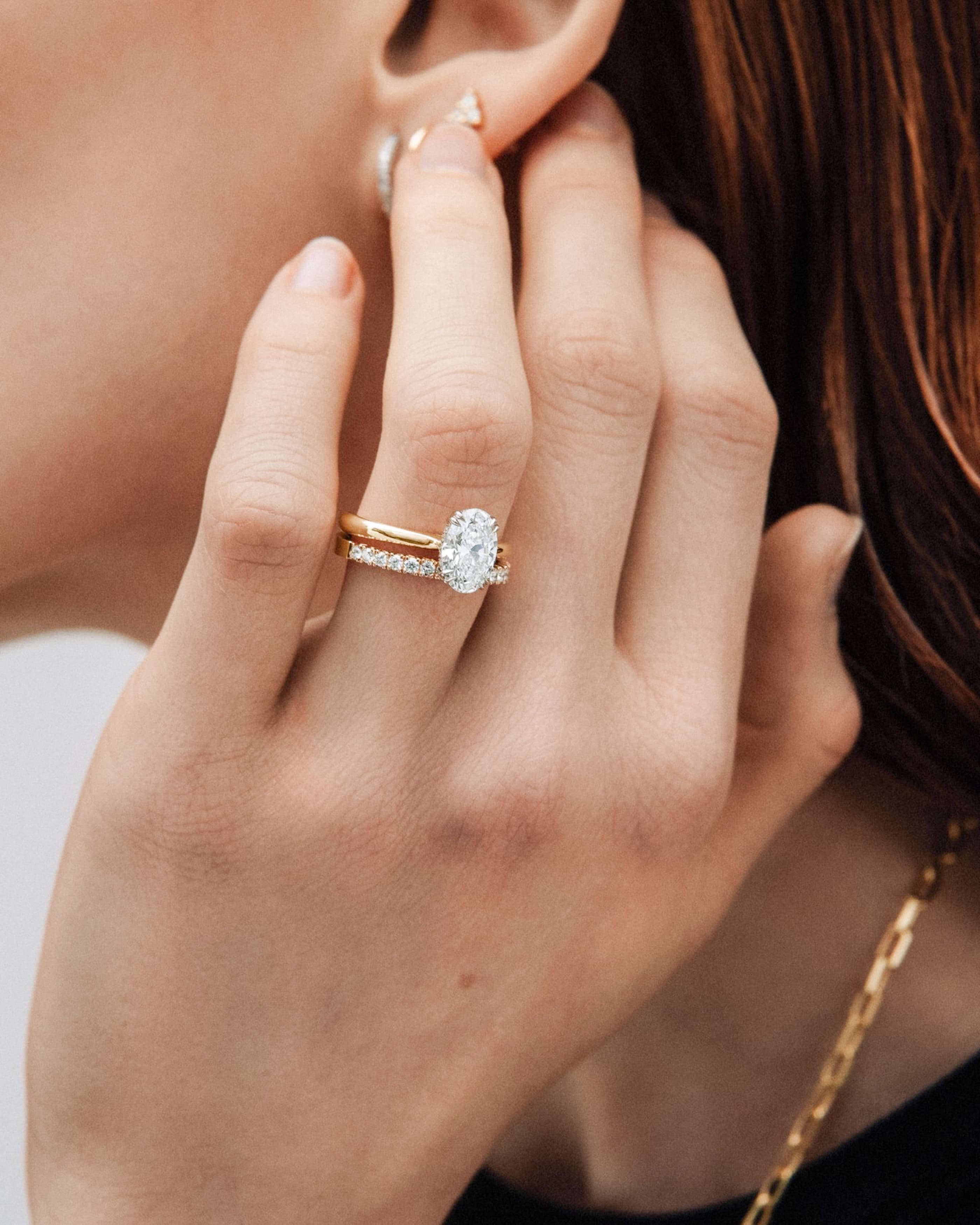
Carat is weight, not size. What you actually see on a hand is spread — the face-up surface area of the stone. Elongated shapes convert weight into spread more efficiently than a round brilliant, so they look bigger for the same carat, and the same money. The figures below are directional trade consensus — read them as "typically," not a guaranteed percentage on any single stone.
| Shape | Typically reads vs a round of equal carat |
|---|---|
| Round | Baseline |
| Pear | ~8-12% larger |
| Oval | ~10-15% larger |
| Marquise | ~15-20% larger |
| Emerald / radiant | Larger via the rectangular outline |
Elongated cuts also lengthen and flatter the finger, which is part of why ovals dominate Australian requests. One caution from our bench: elongated brilliants can show a bow-tie — a dark shadow across the centre — and it is never noted on the report, so judge spread and life on the video or the stone in person. If you are weighing shapes, our guide to choosing a shape goes deeper.
Match colour to your metal
Colour is the easiest place to save without anyone noticing, because the right grade depends entirely on the metal around it. For platinum and white gold, G-H is the widely cited sweet spot — it faces up colourless but costs meaningfully less than D-F. Yellow and rose gold do you an extra favour: the warm metal reflects into the stone and masks any faint tint, so you can drop to I-J (sometimes lower) and still read bright and white. Insisting on a high colour grade regardless of the setting is simply money left on the table. Our gold vs platinum guide pairs metals and colour grades in full.
"Eye-clean SI" is a range, not a promise
"Eye-clean" means a trained grader cannot spot inclusions from about 9-12 inches without magnification — and it is the clarity target worth aiming for, since it looks flawless in wear for far less than a flawless grade. The trap is treating "SI" as one safe rule, because eye-clean odds fall off a cliff as clarity drops:
| Clarity grade | Chance of being eye-clean |
|---|---|
| VS2 | ~95% |
| SI1 | ~50% |
| SI2 | ~10-15% |
So SI1 is a genuinely safer bet than SI2, and at SI2 you are more likely than not to see an inclusion. The rule is not "buy SI" — it is buy the specific stone after viewing its clarity plot and video (or having your jeweller view it), never the grade on faith. This is exactly where sizing up bites: a bigger stone gives any inclusion more room to show, so clarity discipline matters more, not less, as you go up in carat.
Buy just under a magic size
Diamond prices jump at round-number weights — the "magic sizes" of 0.50, 0.70, 0.90, 1.00, 1.50, 2.00 and 3.00ct. Crossing one (0.99 to 1.00ct, or 1.49 to 1.50ct) can add 10-20% or more per carat, even though the extra diameter is a fraction of a millimetre, invisible to the naked eye. The premium is pure consumer psychology — the wish to say "it's a full carat" — not scarcity, which is why it survives intact in lab-grown pricing even though lab-grown has none of natural diamond's supply constraints. Buy a hair under — 0.90-0.95ct instead of 1.00, or 1.90ct instead of 2.00 — and you typically save 15-30% for a stone no one could pick apart from the magic weight on sight.
Keeping a bigger stone wearable every day
A larger centre only earns its keep if you can wear it without worry, and the setting decides that. Low-profile and bezel settings are the consistent trade recommendation for big everyday stones: a bezel wraps metal fully or partly around the girdle, so there are no prong tips to catch on clothing, hair or gloves; it shields the vulnerable edges from chips; it sits the stone closer to the finger, reducing the leverage that knocks a tall setting loose; and it grips evenly all the way round rather than at a few points. Browse our bezel collection to see how this reads with a larger centre stone. "Proportion to hand" — matching stone size to finger length, width and ring size — is sound stylist convention rather than a hard rule, but it is worth a second opinion before a big jump in size. Our engagement ring styles guide shows how settings change the look, and our ring size finder helps you get the fit right. Every Savoir-Faire ring is backed by our warranty and aftercare, handled at our Australian workshop.
What a smart value build looks like
Put the levers together and a strong build is easy to picture: an excellent-cut 1.90ct elongated oval on an IGI report; G-H colour if it is going into white gold, or I-J if into yellow; SI1 confirmed eye-clean on the video; set low in a bezel. That reads like a big, bright two-carat stone, wears comfortably day to day, and costs far less than a 2.00ct D-VVS stone no one could tell apart on a hand.
Common questions
Are lab-grown diamonds still dropping in price in 2026?
Overall the fall has slowed to about 13% year-on-year in Q2 2026, extending a run of decelerating declines, as prices approach a production-cost floor. But the declines are now concentrated in larger stones — 1.5ct-plus fell 11-20% year-on-year while 1-carat rounds firmed slightly — so sizing up is where the value is still moving.
How much bigger does an oval look than a round of the same carat?
Typically about 10-15% larger face-up, because the elongated outline spreads the same weight over more visible surface. Marquise reads larger still (~15-20%), pear a little less (~8-12%). Treat these as directional and always confirm on the actual stone.
Do I need an IGI report to shop by colour and clarity now?
For a lab-grown diamond, effectively yes. Since 1 October 2025 GIA grades new lab-grown stones only as "Premium" or "Standard," without the D-Z colour and clarity letters, so you need an IGI report (or a pre-October-2025 GIA one) to see and compare specific grades.
Is SI clarity safe for a lab-grown diamond?
SI1 usually is — around half of SI1 stones are eye-clean, and a well-chosen one looks flawless in wear. SI2 is risky, with only about 10-15% eye-clean, so never buy SI on the grade alone; view the clarity plot and video first.
What size should I buy to avoid the magic-size premium?
Buy just under the round number — around 0.90-0.95ct instead of 1.00, or 1.90ct instead of 2.00. The diameter difference is a fraction of a millimetre and invisible, but the saving is commonly 15-30% because the premium is psychological, not physical.
Are big lab-grown diamonds practical for everyday wear?
Yes, if you set them sensibly. A low-profile or bezel setting protects the edges, removes snag-prone prong tips and sits the stone closer to the finger, which keeps a larger centre stone comfortable and secure for daily wear.
Sizing up on lab-grown is one of the few moments in jewellery where the timing and the value line up — provided you spend on cut and spread, buy grades to suit the setting, and read the actual stone rather than the label. When you are ready, we can source a stone to your exact spec, you can browse our engagement ring collection, or book a consultation and we'll walk through real options with the report and video in hand.