
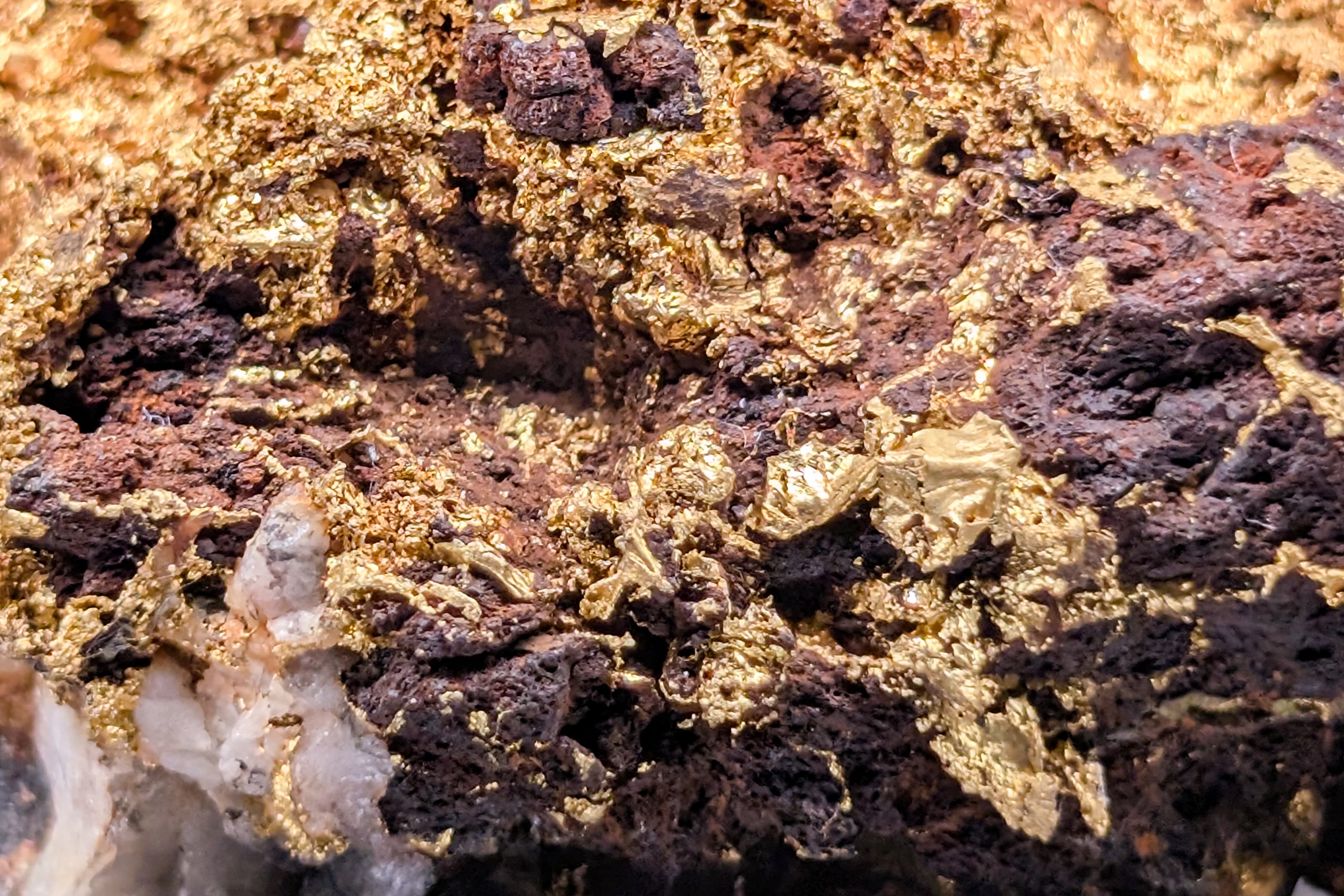
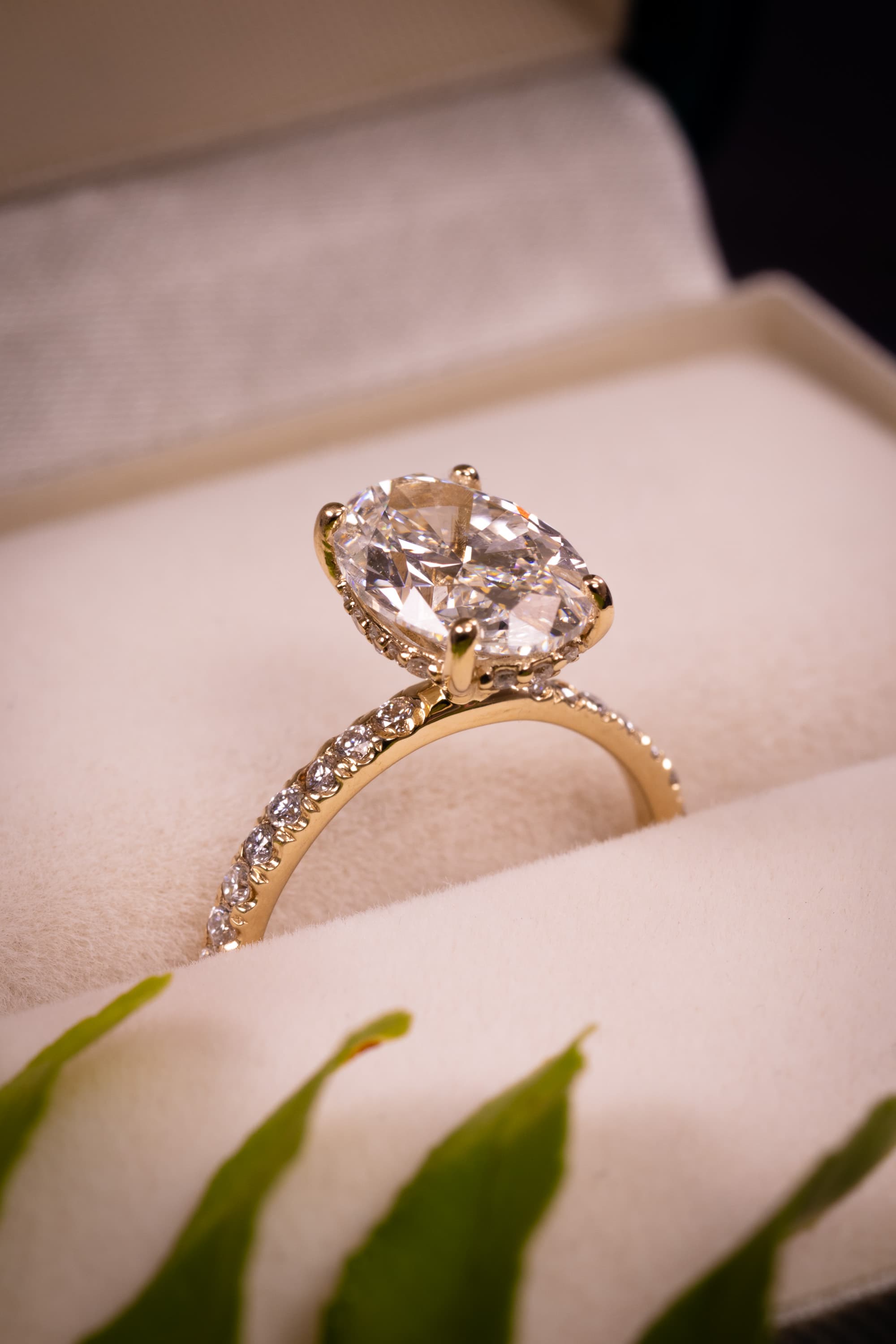
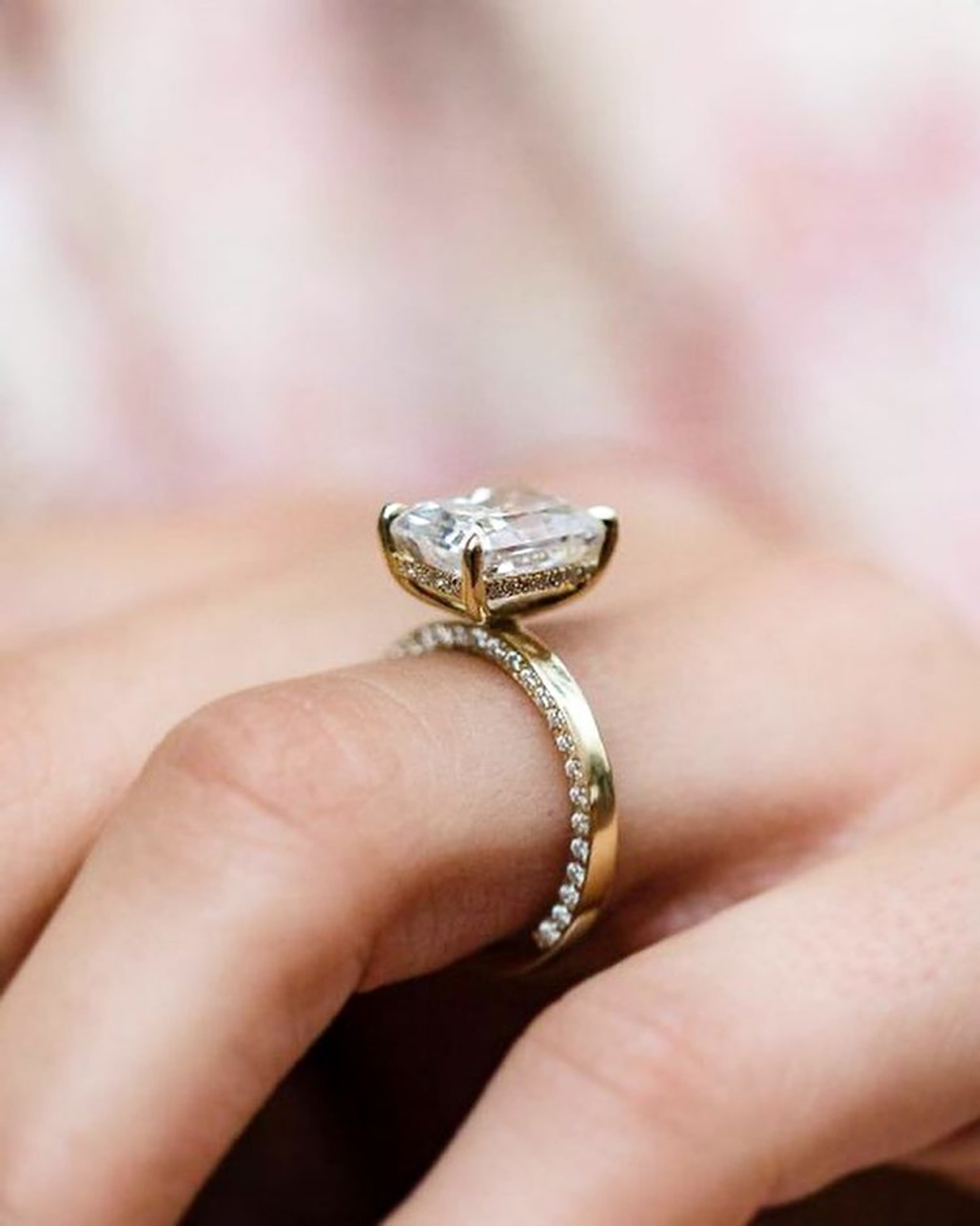
Rising gold prices mean the metal in an engagement or wedding ring now costs meaningfully more than it did a year ago — and on heavier or thicker designs, that metal can quietly become one of the biggest lines on your invoice, not the stone. At Savoir-Faire Jewellery, our Melbourne atelier prices every custom ring as three parts — the stone, the metal, and the labour to cast and set it — so when the gold price moves, we can show you exactly where it lands and how to design around it. The short version: gold hit record highs across 2025-26 and remains historically elevated and volatile, but a few informed choices (band profile, karat, when you lock your quote, and lab-grown over natural) keep a beautiful ring firmly inside a sensible budget.
Where gold prices actually sit right now
Gold broke US$4,000 an ounce for the first time ever on 8 October 2025, then kept climbing to an all-time high of roughly US$5,589 on 28 January 2026. Since that peak it has corrected sharply. As of mid-July 2026, spot gold sits near US$3,985-4,010 an ounce — still roughly 19% above where it was in July 2025, and around 45-50% above where the rally began in early 2025 (near US$2,700). In Australian terms, 24ct gold is running around A$186-188 per gram; that works out to roughly A$140/g at 18ct (75% pure) and about A$70/g at 9ct (37.5% pure). Treat those AUD-per-gram figures as indicative — aggregators disagree by a few percent depending on the exchange rate and the moment they snapshot.
The gotcha: do not assume gold is "at a record high" today. The record was set in January 2026 and the price has eased since. The accurate framing for planning a ring is that gold is elevated and moves quickly — which is exactly why when you lock your metal price matters more than usual.
Why gold surged in the first place
This was not a jewellery-demand story. In fact, jewellery-sector gold demand fell about 23% in the first quarter of 2026 as prices bit. The rally was driven by:
- Central-bank buying — roughly 863 tonnes purchased in 2025, well above the pre-2022 average of 400-500 tonnes a year, led by Poland, with China, India, Kazakhstan, Brazil and Turkey also among the buyers. Much of this is reserve diversification and geopolitical hedging.
- A weaker US dollar and monetary easing, which make gold more attractive to hold.
- Record inflows into gold funds plus strong retail bar and coin demand.
- Concern over US federal debt (now above US$39 trillion) pushing investors toward a traditional store of value.
What this means for you: the pressure on gold is macro-economic, not a passing seasonal spike, so it is sensible to plan a ring on the assumption that metal stays expensive rather than betting on a quick drop.
How the gold price actually reaches your ring quote
A custom ring's price is the stone, plus the metal (its weight × purity × the current spot price), plus the labour to cast, finish and set it. The design decision that moves the metal cost most is not how "expensive" a ring looks — it is how many grams of gold it uses.
- Band width and thickness drive gram weight up disproportionately. A solid, wide, comfort-fit band uses far more metal than a fine or knife-edge profile of the same style.
- Halo, cluster and multi-band designs use more metal than a simple solitaire.
- Shank construction (solid vs hollowed) changes the weight for a near-identical look.
Trade commentary used to put a natural-diamond engagement ring's cost split at roughly 80% stone, 20% setting. That is the old baseline — and it is compressing fast. Gold per gram is up roughly 45-50% while lab-grown diamond prices have fallen sharply (loose lab-grown prices reportedly down close to 40% at some retailers over the same window). So metal and labour are now a much larger share of the bill than they were pre-2025, especially on heavier bands. Our Gold vs Platinum guide walks through how each metal behaves; our design process page shows how we quote each element separately so nothing is hidden.
Platinum, 18ct and 9ct: what each really costs
Australia's retail market runs on 9ct (375, 37.5% pure) and 18ct (750, 75% pure) — the standard fineness marks here, with Australian Consumer Law prohibiting any misleading metal description. 18ct is the standard, expected metal for engagement and wedding rings here; 9ct is the recognised finer-band and budget alternative. (14ct is a US convention and barely features locally — if a guide keeps saying "14k", it was written for a different market.)
| Metal | Purity | Cost & upkeep notes |
|---|---|---|
| 9ct gold | 37.5% (375) | Lowest metal cost; harder-wearing; the sensible finer-band saver. |
| 18ct gold | 75% (750) | The AU engagement standard; richer colour; white gold needs periodic rhodium re-plating. |
| Platinum | ~95% | Highest finished cost; denser and harder to work; no plating ever needed. |
The counter-intuitive bit: platinum's raw per-ounce price is now only about 40% of gold's (roughly US$1,620-1,680 mid-July 2026, after it more than doubled and then corrected in its own 2025-26 surge). Yet a finished platinum ring still costs more than the same design in gold. Why? Platinum is used at about 95% purity versus 75% for 18ct, it is denser so the same design weighs more, and it is harder and costlier to cast and finish. In practice a platinum setting typically runs A$800-1,500 more than the equivalent in 9ct or 18ct gold, and can approach double an 18ct piece on some designs. Browse our platinum collection to see the finished cost in context.
One point that is not about spot price at all: white gold is rhodium-plated to achieve its bright white finish, and that plating wears and needs periodic re-application — a small, recurring aftercare cost. Platinum is naturally white and never needs plating. So the white-gold-versus-platinum choice is a lifetime-upkeep decision as much as a purchase-price one, which is worth weighing alongside our jewellery care guide.
How to keep a ring on budget as gold climbs
Four levers do the heavy lifting, roughly in order of impact:
- Choose lab-grown over natural for the stone. This is the single biggest budget lever — more on why below, and in our lab-grown diamond guide.
- Refine the band profile. A slightly finer or hollowed shank can cut gram weight noticeably with little visible difference. This matters more now than in any recent year.
- Consider 9ct for the band where a lighter cost matters — particularly for wedding bands worn daily. See our Wedding Ring Guide for how bands pair with a ring.
- Lock your quote early. Standard trade practice for bespoke pieces is that metal is priced "on the date of purchase or delivery" — the quoted metal cost is indicative and can move with spot until your order is placed and confirmed. In practice that window is typically days to a few weeks, not months, so once you are happy with a design, confirming promptly protects you from an upward move.
The good news: lab-grown puts the budget back in your control
Here is why lab-grown is our default recommendation right now (natural is always available for those who want it — this is an informed choice, not a knock on natural stones). Because lab-grown diamond prices per carat are already low and have kept falling, the stone is the smaller, more flexible cost lever on a lab-grown ring. Choosing lab-grown over a comparable natural diamond frees up a large chunk of budget — and that freed budget is exactly what now covers pricier gold or platinum and the craft, rather than the stone dominating the invoice the way it did for natural stones before 2025.
An honest caveat: do not read this as "the stone still drives most of the cost" as a hard rule for 2026. At today's gold prices, on a heavier or thicker band or a platinum setting, metal plus labour can now equal or exceed the stone cost on a modest-carat lab-grown ring. The claim holds well for smaller-to-mid carats and simple solitaires, and less so as both carat and band weight scale up. The practical takeaway stands regardless: lab-grown is where you reclaim the budget that rising metal prices have absorbed — which is also why more couples are sizing up their centre stone without overspending. If you have a specific stone in mind, our Stone Concierge can source it to spec, all independently certified by IGI, GIA or GCAL.
Common questions
Is now a bad time to buy an engagement ring?
No. Gold is elevated but has already corrected off its January 2026 peak, and lab-grown stone prices are the lowest they have been. The smart move is to design around the metal cost — finer band, lab-grown stone — rather than to wait for a gold drop that may not come.
Should I choose 9ct gold to save money?
9ct is the recognised budget and finer-band option in Australia and is harder-wearing, which suits daily-worn wedding bands well. 18ct remains the standard for engagement rings because of its richer colour and higher gold content. Many couples mix the two — a legitimate and widely accepted choice.
Why does platinum cost more than gold if platinum is cheaper per ounce?
Because a finished ring is about grams used, not the headline spot price. Platinum is used at ~95% purity versus 75% for 18ct, it is denser so the same design weighs more, and it is harder and costlier to work. The result is a higher finished price even though platinum's per-ounce cost is currently well below gold's.
How long is a ring quote valid?
For custom pieces, metal is normally priced on the date of purchase or delivery, so a quote's metal component is indicative until you confirm the order. That confirmation window is typically days to a few weeks. Once you are happy with the design, locking it in promptly protects you from an upward move in the gold price.
Will white gold cost me more over time than platinum?
Possibly in upkeep. White gold is rhodium-plated for its bright finish, and that plating wears and needs occasional re-application — a small recurring cost. Platinum never needs plating. Weigh that lifetime maintenance against platinum's higher upfront price when you choose.
Does a lab-grown diamond really lower the total cost that much?
Yes — it is the largest single lever. A lab-grown stone frees up a substantial share of budget compared with a comparable natural diamond, which is what now absorbs the higher cost of gold and platinum. On heavier or platinum designs, metal and labour may rival the stone, but lab-grown still keeps the overall ring materially more affordable.
Rising gold prices reward planning, not panic. If you would like a ring designed around today's metal costs — the right band profile, the right karat, and a lab-grown stone that puts the budget back where you want it — book a consultation with our Melbourne atelier, browse ready-made designs in our engagement ring collection, or ask our Stone Concierge to source your exact stone. Every price we quote is GST-inclusive and every ring is backed by our lifetime warranty.