
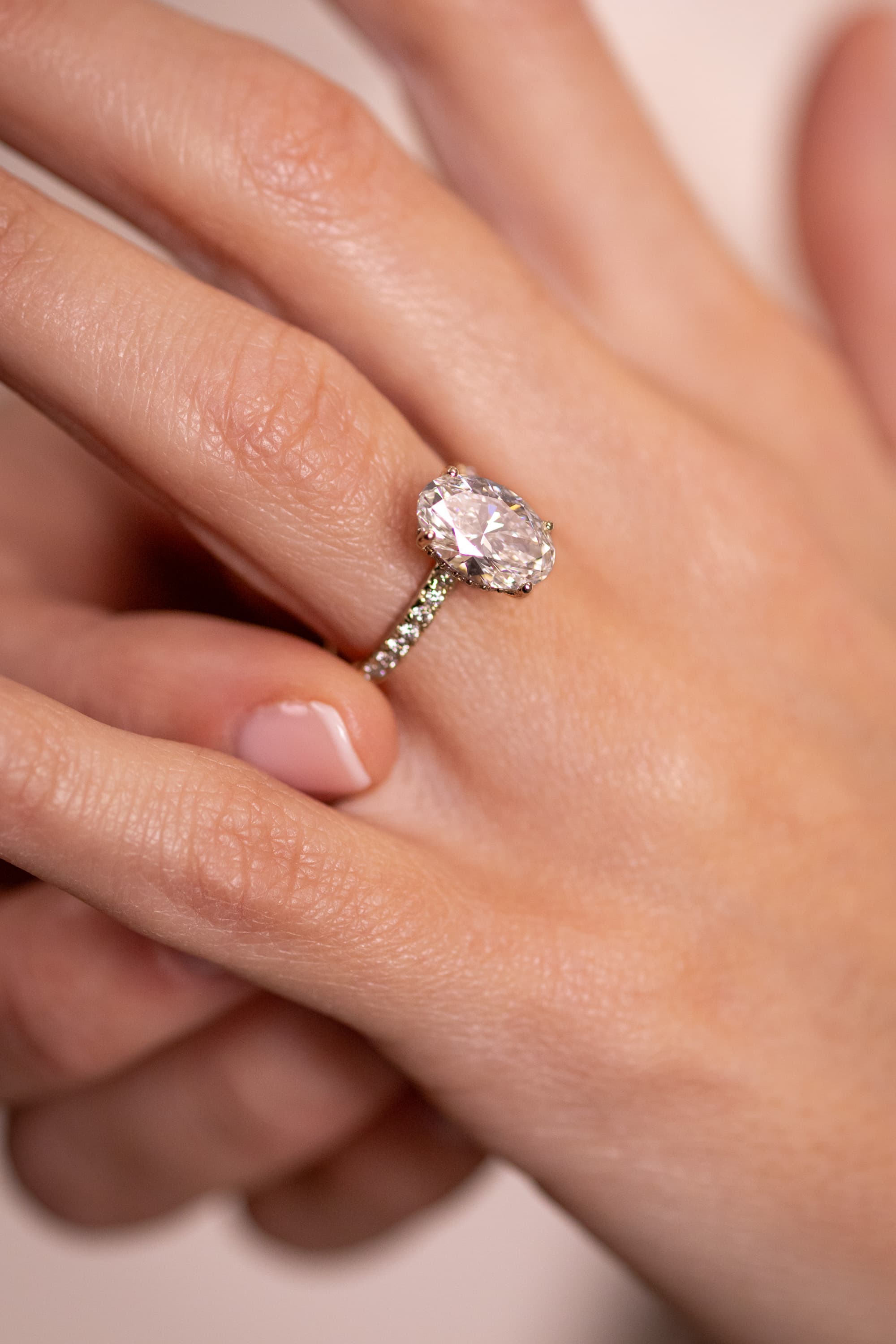
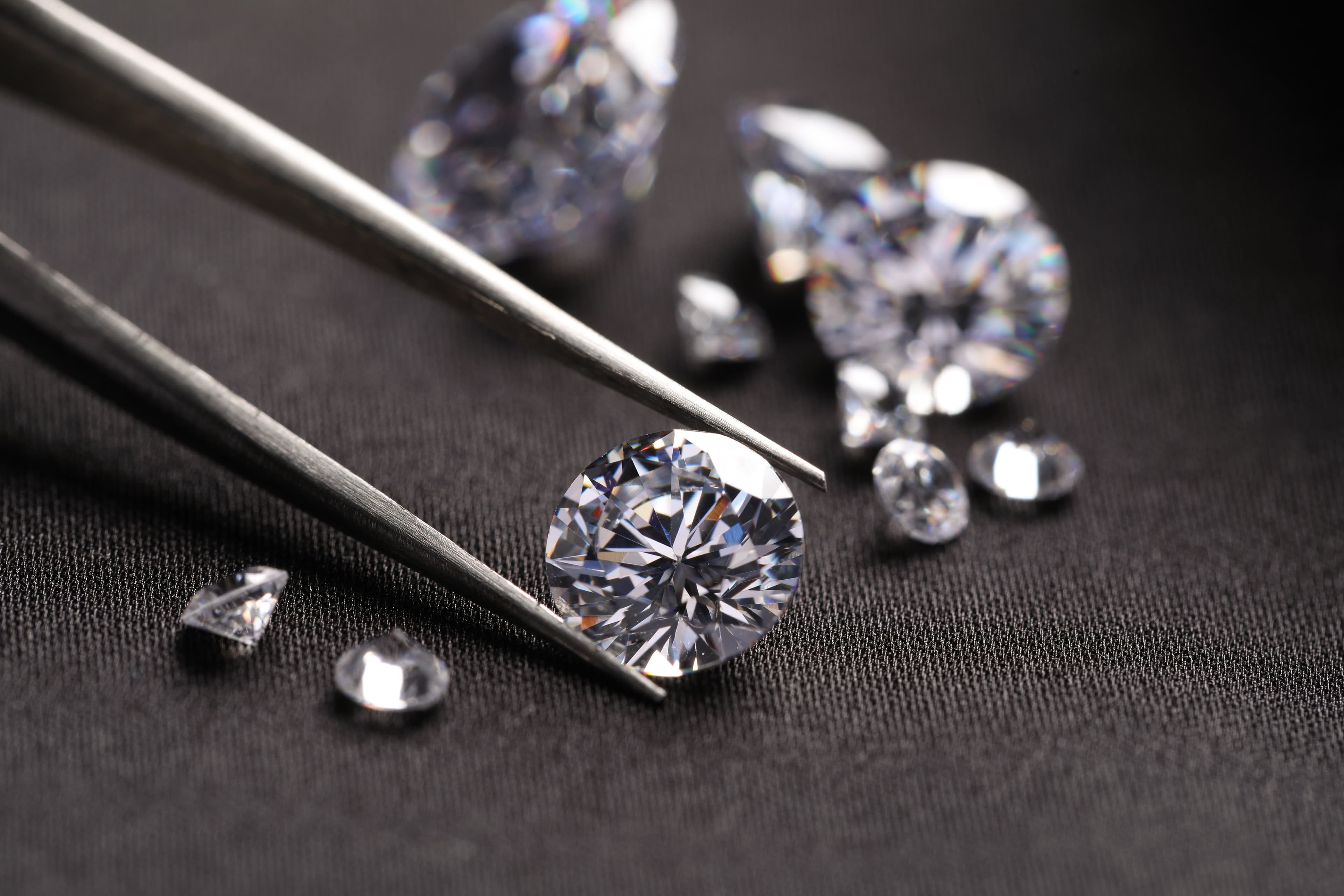
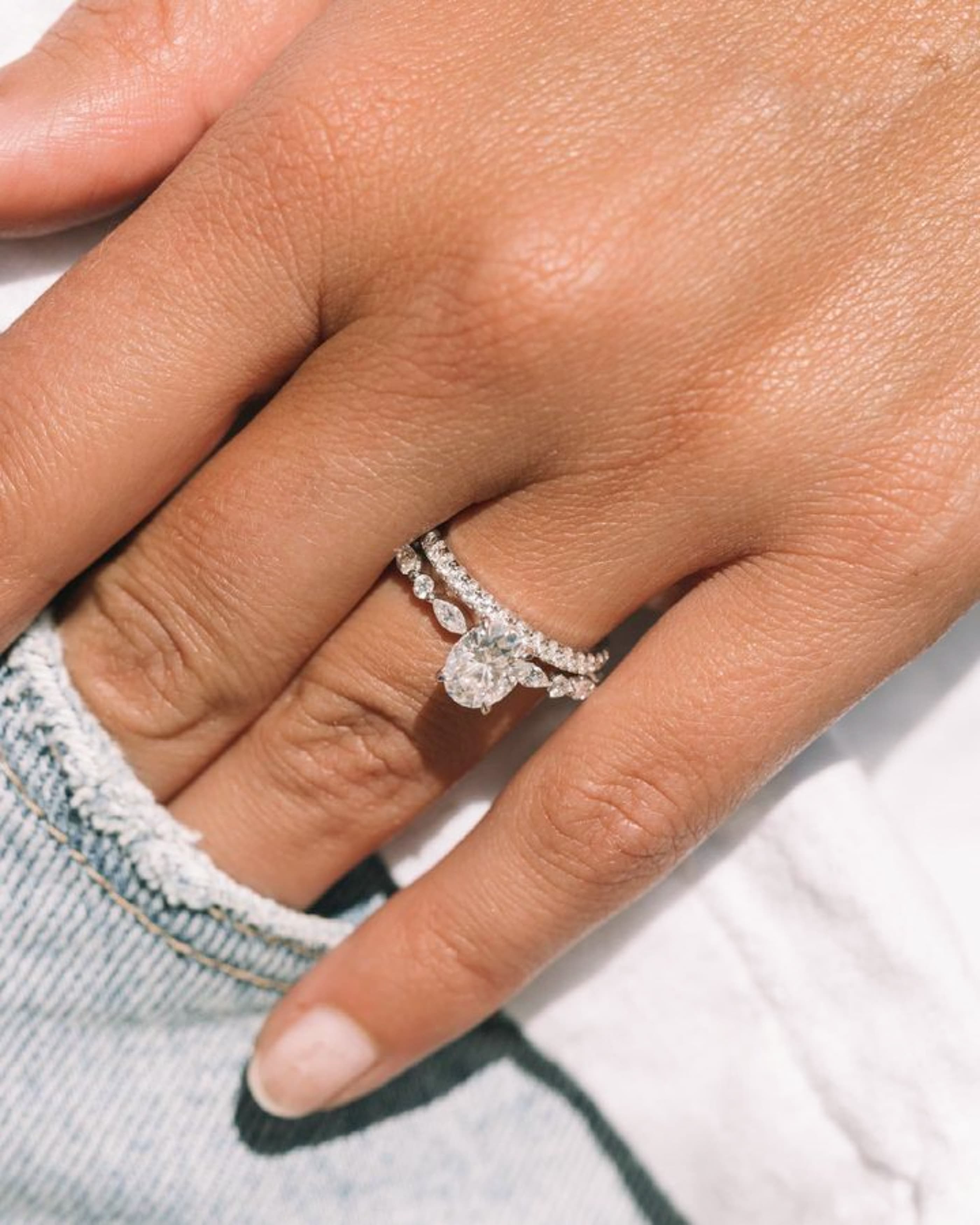
A lab-grown diamond is a real diamond — the same carbon crystal structure, the same hardness and the same fire as a mined stone — grown in a laboratory over a few weeks rather than formed underground over billions of years. At Savoir-Faire Jewellery, our Melbourne atelier leans strongly toward lab-grown for engagement rings, because it lets you buy a larger, cleaner, better-cut stone for the same budget with no visible compromise. This is the practical guide every Australian buyer needs in 2026: how the 4Cs apply, why diamond certification changed sharply in October 2025, where prices have actually landed, and how to buy locally so you keep every consumer protection you are entitled to.
What a lab-grown diamond actually is
Lab-grown diamonds are made by two methods — HPHT (high pressure, high temperature) and CVD (chemical vapour deposition) — both of which build genuine diamond crystal from a carbon source. The result is chemically, physically and optically identical to a mined diamond. It is not a simulant like cubic zirconia or moissanite; it will pass a diamond tester, because it is diamond. The only way to tell a lab-grown stone from a natural one is with specialised laboratory equipment — no jeweller can do it with a loupe. If you want the full science, our lab-grown diamond guide goes deeper.
The 4Cs still apply — mostly
Cut, colour, clarity and carat weight matter for a lab-grown stone exactly as they do for a natural one, and cut is still the single biggest driver of how a diamond looks. A well-cut G colour, VS2 clarity stone will out-sparkle a poorly cut D flawless one every time — it is why a simple solitaire setting so often shows off a well-cut stone better than a heavily dressed one. Because lab-grown removes most of the price penalty for going up in size and quality, the smart play is to prioritise an excellent cut first, then buy as much colour and clarity as your budget allows — which is exactly why so many couples are choosing bigger centre stones without overspending. If the 4Cs are new to you, read our 4Cs of diamonds guide before you shop.
Certification: the October 2025 change you must understand
This is the part that trips up buyers in 2026, so read it carefully. Effective 1 October 2025, GIA stopped issuing full letter-grade 4Cs reports for lab-grown diamonds. A GIA report on a lab-grown stone now shows only one of two descriptive tiers — "Premium" (roughly D colour, VVS clarity or higher, with Excellent polish, symmetry and cut) or "Standard" (roughly E–J colour, VS clarity or higher, with Very Good polish, symmetry and cut). There is no specific "D VVS1 Excellent" on a new GIA lab-grown report anymore. GIA's reasoning is that lab-grown stones cluster in a narrow quality band, so natural-diamond nomenclature no longer suits a manufactured product.
IGI did not follow suit. IGI kept full, traditional 4Cs grading for lab-grown — colour, clarity, cut, polish, symmetry and fluorescence — which makes it the practical default for anyone who wants a specific grade to compare stones. That matters when you compare paperwork: a pre-October-2025 GIA report shows a detailed grade, but a newer one only says Premium or Standard. Do not assume the two describe the same thing. Our diamond certificates guide unpacks how to read each report.
One honest caveat on IGI: it has historically graded a little more leniently than GIA on colour and clarity for the same physical stone, and independent comparison testing backs this up. It is still a reputable, globally used lab — just do not treat an IGI "D VVS1" as identical to a GIA one. For buyers chasing maximum brilliance, GCAL by Sarine offers an 8X ultimate cut grade (fewer than 1% of "Excellent"-cut diamonds qualify), a laser Gemprint identifier and a grading-accuracy guarantee. It is a smaller, pricier niche — worth it if you want the strictest possible cut verification, not a replacement for IGI as your default. Our own diamonds are independently certified, primarily through IGI, with GIA and GCAL also available.
| Lab | Lab-grown grading in 2026 | Best for |
|---|---|---|
| IGI | Full 4Cs — colour, clarity, cut, polish, symmetry | The practical default; most AU and global retailers |
| GIA (after 1 Oct 2025) | Two tiers only: "Premium" or "Standard" | Buyers who want the GIA name and accept no letter grade |
| GCAL by Sarine | Full grading plus 8X cut grade and accuracy guarantee | Strictest possible cut and brilliance verification |
One rule holds across all three: a legitimate grading lab never prints a dollar "value" on the grading report. Grading and monetary appraisal are always separate documents. Hold that thought — it is the single most useful red flag below.
2026 pricing: the crash, then the floor
Lab-grown prices have fallen roughly 85–90% since 2020 — a commonly cited benchmark 1ct round dropped from around USD $3,410 per carat in January 2020 to about USD $409 in early 2026, as production capacity expanded more than 300%. That collapse is real, but the important 2026 message is that it has largely played out. Market commentary now describes prices as stabilising — a floor, not a falling knife — with any further declines expected to be gradual rather than another cliff. There is no reward for waiting indefinitely.
In Australian retail terms, a 1ct round, G colour, VS2 clarity, Excellent-cut lab-grown stone runs roughly AUD $1,200–$2,000 in 2026 depending on the exact 4Cs, and lab-grown broadly sits at about 15–25% of the price of an equivalent natural diamond. That gap is what funds a bigger or better stone.
| Reference point | Approximate figure |
|---|---|
| 1ct round wholesale, Jan 2020 | ~USD $3,410/ct |
| Same benchmark, early 2026 | ~USD $409/ct |
| AU retail, 1ct G/VS2 Excellent | ~AUD $1,200–$2,000 |
| Lab-grown vs natural price | ~15–25% of natural |
| Typical resale return | ~10–20% of retail |
The blunt truth about resale
Lab-grown diamonds are not a store of value, and you should buy one knowing that. Realistic resale is around 10–20% of what you paid (occasionally up to 20–30% for an exceptional, well-certified stone), versus roughly 50–60% retention for natural diamonds. The reason is not ordinary depreciation — it is that any resale stone competes against brand-new production that keeps getting cheaper. Buy lab-grown because it gives you a beautiful ring at a sane price today, not as an investment. If long-term value retention is your priority, that is a legitimate reason to consider natural — an informed choice, not a better or worse one.
Buying locally in Australia
Where you buy matters as much as what you buy. Three things an Australian jeweller gives you that an overseas drop-shipper cannot:
- GST-included pricing. Australian retail prices are quoted with the 10% GST already built in — no surprise tax at checkout. Order from an overseas site and you may be hit with import GST or duty on delivery.
- Australian Consumer Law. ACL consumer guarantees apply automatically to goods bought in Australia (and from AU-based online retailers). They cover acceptable quality and fitness for purpose and entitle you to a repair, replacement or refund for a major failure. Critically, they cannot be excluded by a store's own warranty wording — a jeweller's "12-month warranty" sits on top of your statutory rights, it does not replace them. ACL does not cover normal wear, gradual degradation or misuse.
- Local aftercare. Resizing, repairs and a warranty claim path handled in Australia, not shipped overseas. At Savoir-Faire that means a lifetime warranty, a complimentary resize within 12 months and a Melbourne workshop — see our warranty details, and grab a complimentary sizer via our ring size finder.
Insuring a lab-grown engagement ring
Lab-grown diamonds are insured and appraised exactly like natural ones, with two rules that are specific to them. First, insure at replacement value, not purchase price or cash value. Replacement-value cover guarantees a comparable stone regardless of market movement; cash-value cover pays out at the lower resale-market price. Second, get an independent appraisal — not one from the selling jeweller alone — that documents replacement value. Because lab-grown prices keep drifting down, those appraisals go stale faster than for natural stones, so refresh yours every 2–3 years to keep the insured value realistic and your premiums proportionate.
Financing your ring
Buy-now-pay-later is mainstream in the Australian jewellery trade for lab-grown rings, not a fringe option. Afterpay, Zip, Humm and Latitude are widely available — Humm offers interest-free terms up to around 18 months on eligible bands, and Afterpay runs its standard four-instalment, 25%-upfront model. The interest-free part only holds if you pay on schedule, so read the terms, but the availability itself is genuinely broad across the market.
Red flags to walk away from
The most important one first: a "certificate" that also prints a dollar value. Real independent labs (GIA, IGI, GCAL) keep grading and monetary appraisal on separate documents. A combined report showing an inflated "value" next to the grade is a classic trick to make a "discount" look bigger than it is. Others to watch for:
- No-name or obscure grading labs, or an "in-house" certificate issued by the seller with no independent lab involved.
- High-pressure selling, discouraging a second opinion, or treating the certificate as the only proof you need.
- A missing clarity plot — a known gap on some IGI digital lab-grown reports. Ask for the full PDF or physical report, not a summary card.
- Overseas-only sellers with no Australian entity: no ACL protection, no local resizing or warranty path, and a possible import GST or duty surprise on delivery.
Common questions
Are lab-grown diamonds real diamonds?
Yes. They have the identical carbon crystal structure, hardness and optical properties as mined diamonds and will pass a diamond tester. Only specialised lab equipment can distinguish the two.
Is IGI or GIA better for a lab-grown diamond in 2026?
For a specific colour, clarity and cut grade, IGI is now the practical choice, because since 1 October 2025 GIA only labels lab-grown stones "Premium" or "Standard" rather than issuing full grades. Both labs are reputable; just note IGI has graded slightly more leniently than GIA historically.
Do lab-grown diamonds hold their value?
No — expect roughly 10–20% of retail on resale, versus about 50–60% for natural diamonds, because resale stones compete with ever-cheaper new production. Buy lab-grown for the ring you get today, not as an investment.
How much is a 1 carat lab-grown diamond in Australia?
Around AUD $1,200–$2,000 for a 1ct round in G colour, VS2 clarity with an excellent cut in 2026, varying with the exact 4Cs. That is roughly 15–25% of the price of a comparable natural diamond.
Are lab-grown diamond prices still crashing?
The steep 2020–2024 decline of around 85–90% has largely played out. In 2026 prices are described as stabilising — a floor rather than a continuing freefall — so there is little advantage in waiting.
Can I insure a lab-grown engagement ring?
Yes, exactly like a natural one. Get an independent appraisal, insure at replacement value rather than cash value, and refresh the appraisal every 2–3 years because lab-grown prices keep shifting.
Lab-grown lets you spend on the ring, not the rarity — and buying from a Melbourne atelier keeps your aftercare and consumer rights close to home. When you are ready, book a consultation to see certified stones in person, use our Stone Concierge to source a diamond to your exact spec, or browse our engagement ring collection to start with a design you love.